On 13th march, Raquel run the solidary race “10K Solidaria Parque agua“, winning again the silver medal as last month in this other one, “7K Enfermedades Raras – Feeteg“.
Congratulations!

On 13th march, Raquel run the solidary race “10K Solidaria Parque agua“, winning again the silver medal as last month in this other one, “7K Enfermedades Raras – Feeteg“.
Congratulations!
These are the first results on a recently published study investigating the anticancer activity of squaramides carried out in collaboration with our collegue and friend Dr. Gemma Triola (IQAC-CISC). This article is part of a themed collection: Special issue devoted to “New Talents: Europe. Medicinal Chemistry” where Gemma was invited to contribute.
Congratulations and thank you so much for making us part of it!
“Squaramides with cytotoxic activity against human gastric carcinoma cells HGC-27: synthesis and mechanism of action” Quintana, M.; Alegre-Requena, J. V.; Marqués-López, E.; Herrera, R. P.; Triola, G. Med. Chem. Commun., 2016, Advance Article. DOI: 10.1039/C5MD00515A
Abstract. A series of  squaramates and squaramides have been synthesized and their cytotoxic activity has been investigated in different cancer cell lines. Among the studied compounds, squaramide 34 showed a potent and selective cytotoxicity against the human gastric cancer cell line HGC-27. Studies directed to elucidate the mechanism of induced cell death were performed. Cell cycle distribution analysis and cell death studies showed that compound 34 induces cell cycle arrest at the G1 phase and caspase-dependent apoptosis. In conclusion, squaramide 34 can be considered a potential anticancer agent for gastric carcinoma.

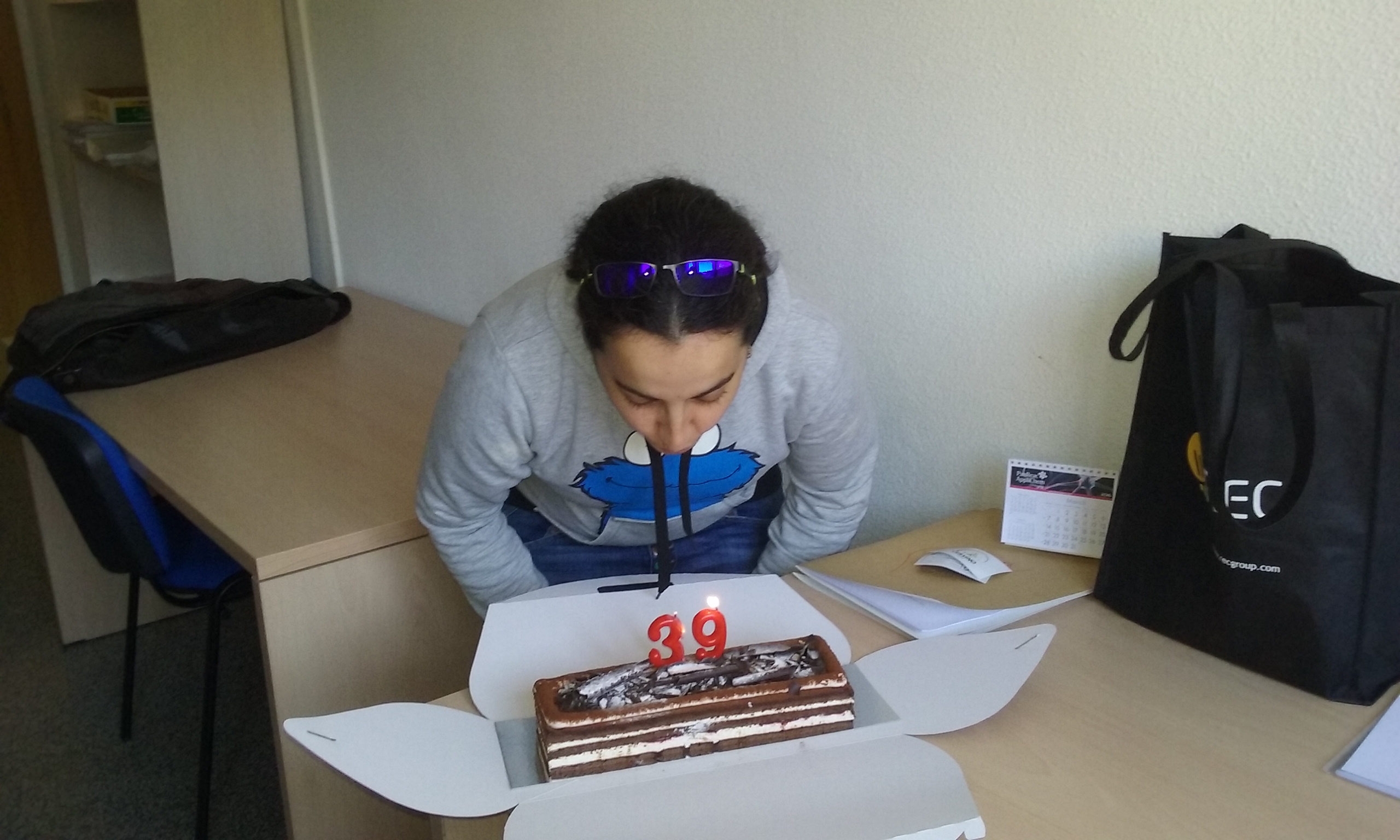
HOCA’s members wish you all the best in your 39th birthday! Have a nice day!!!
How quickly time has passed! We hope that you enjoyed your stay as much as we enjoyed having you with us this month. We are looking forward to having you back soon! So long Yeimy!
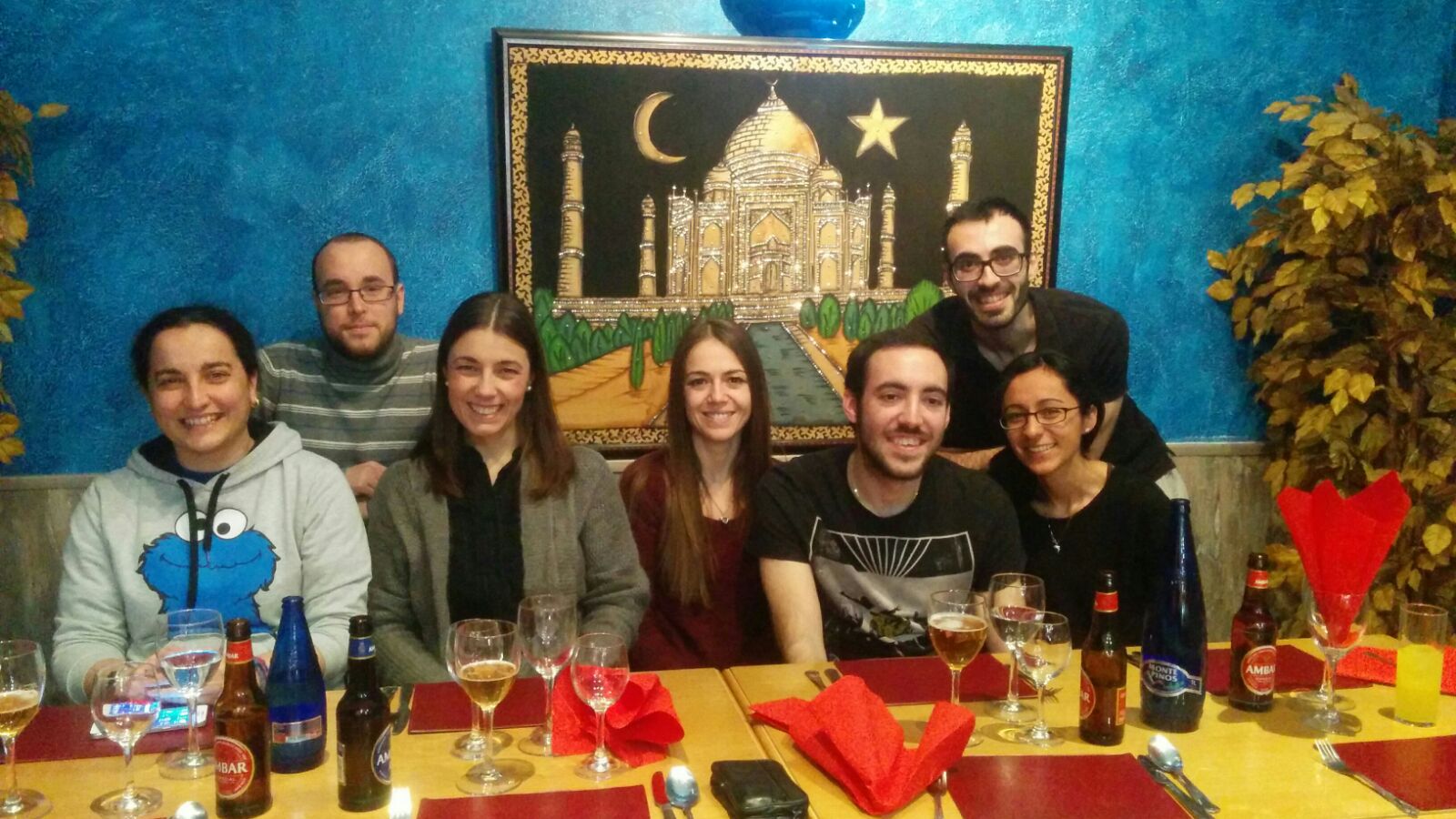
Enjoying the farewell meal with our guest, Yeimy (Raquel, Isaac, Maru, Rosa, Fernando, Juanvi, Yeimy)
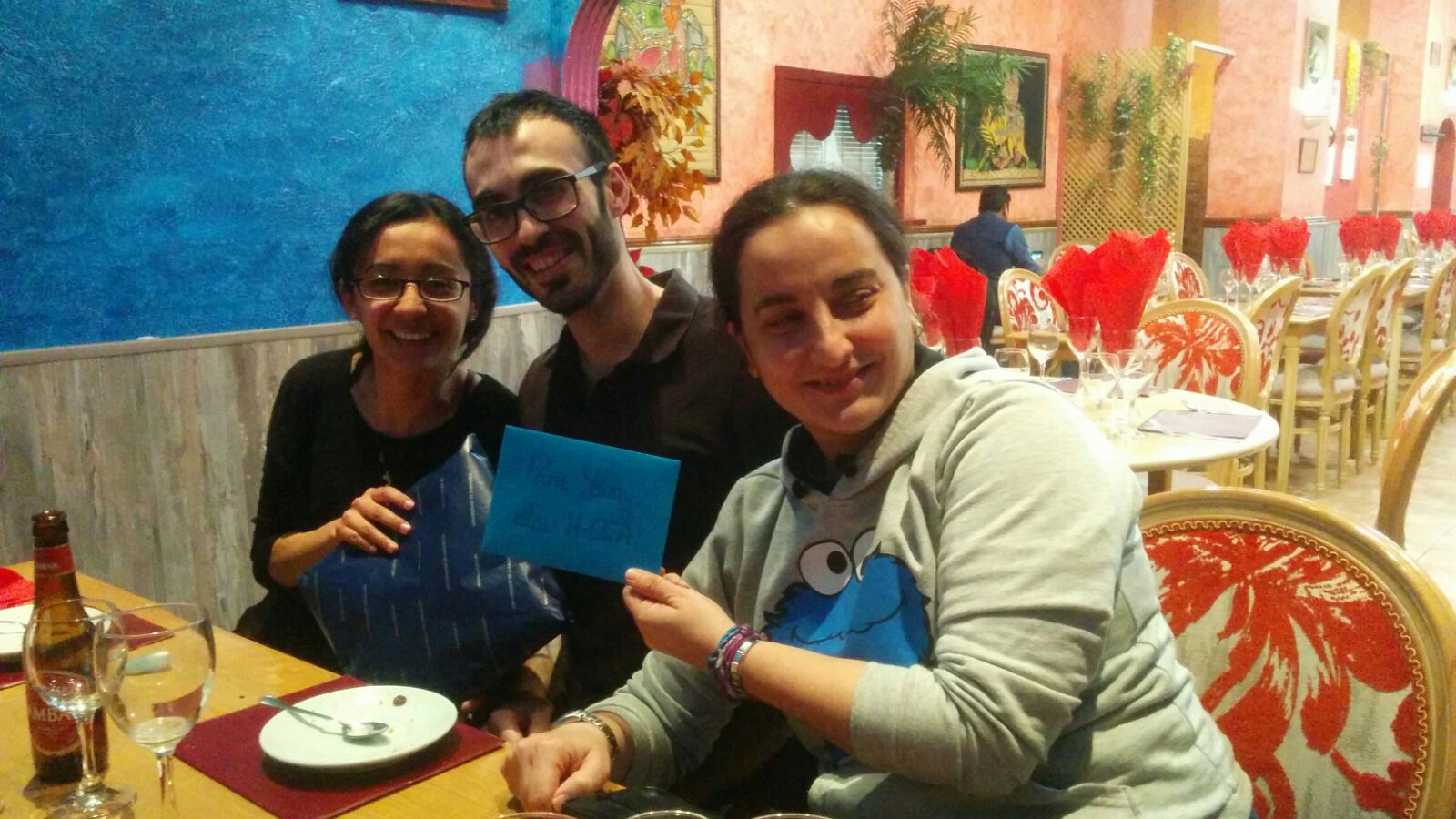
Little present for a great woman!

We hope you like it 😉
On 14th february, Raquel run a race in support to rare diseases (“7K Enfermedades Raras – Feeteg“), winning the silver medal of this solidary event! High level sports and science results all together.
CONGRATULATIONS!
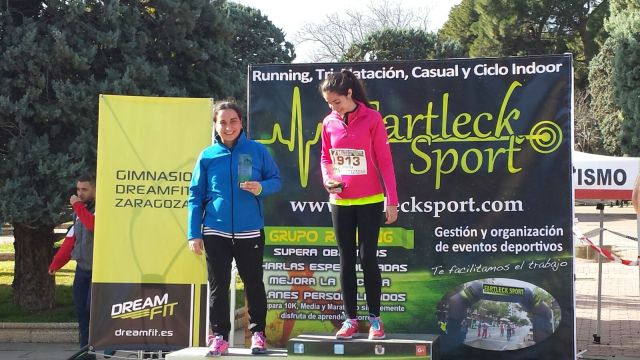
Gold and silver medals in the podium
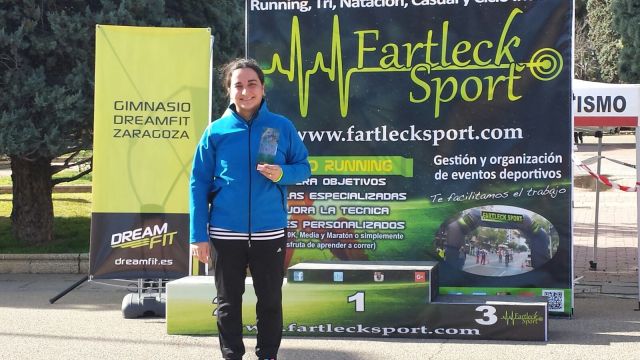
Raquel with her award
We want to give to Rosa (from the University of Alicante) and Yeimy (from the University of Regensburg) our warmest welcome.
We hope you will enjoy your stay with us as much as we enjoy having you here!

He’s got a contract as Highly Qualified Technician at the ISQCH (CSIC-University of Zaragoza). Congrats! You are worth it!

“Drinks with science” (“De copas con ciencia“) is an initiative of research institutes, ISQCH and ICMA (CSIC – University of Zaragoza), which aims to satisfy scientific curiosity of people in an enjoyable and fun atmosphere. This activity brings science (Chemistry and Materials Science) to bars using a scientific format monologue.
The event, with free admission, will begin on January 28 at 20:30 h in the “Magical Cellar” (“Sótano Mágico“, Calle San Pablo 43, Zaragoza) and it will be repeated periodically on the last Thursday of each month.
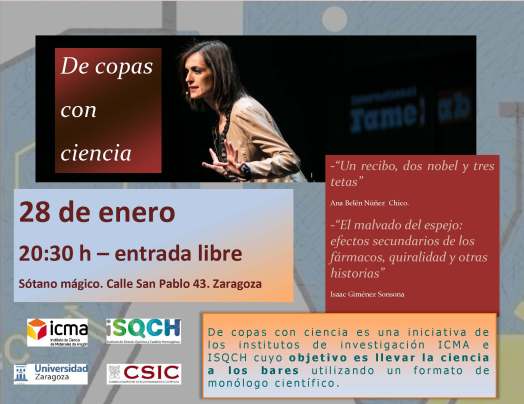
“The evildoer of the mirror: side effects of drugs, chirality and other stories” (“El malvado del espejo: efectos secundarios de los fármacos, quiralidad y otras historias”) – Isaac Giménez Sonsona
Isaac will talk us about the active ingredients in drugs that, along with other chemicals, form three-dimensional structures where their atoms can be oriented in different directions in the space. Thus, giving rise to various structures and some of them can be grouped in pairs because each is “the mirror image” of the other. Nowadays, we know that every “twin” the couple may cause different effects by interacting with living matter. While one of them could have a beneficial effect on health, the other could hurt us or play a beneficial role completely different. Now, the good news! Chemistry has different tools to separate them or produce only the “good twin”, so avoiding problems with the “evil twin”.
Done! What a success! 😉
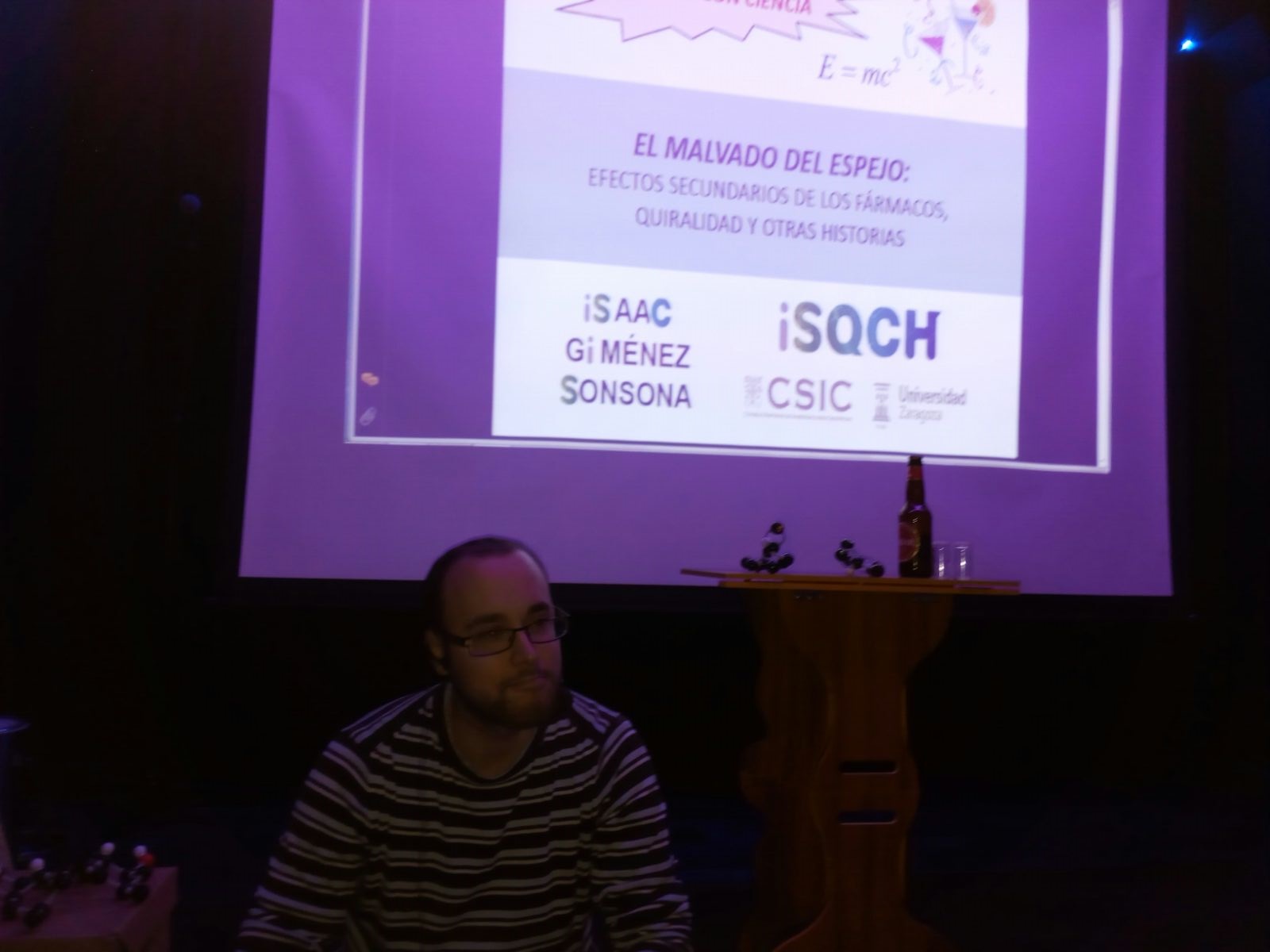
Isaac having fun in “De copas con ciencia”
This is a nice fruit of the intensive and intriguing collaboration between our research group and Prof. Gimeno’s group (ISQCH).
Congratulation guys!
“Synthesis of Luminescent Squaramide Monoesters: Cytotoxicity and Cell Imaging Studies in HeLa Cells” Fernandez-Moreira, V.; Alegre-Requena, J. V.; Herrera, R. P.; Marzo, I.; Gimeno, M. C. RSC Adv., 2016, Accepted Manuscript. DOI: 10.1039/C5RA24521D
Abstract. Novel luminescent  squaramide monoesters functionalised with different fluorophore groups have been synthesised and explored in cell imaging for the first time. Cytotoxicity studies performed in HeLa cervical cancer cells revealed high activity for some of these novel structures, pointing out the importance of the fluorescent fragment in the efficiency of these promising anticancer agents. In addition, fluorescence cell microscopy disclosed the different biodistribution behaviour depending on the fluorescent moiety, and the possibility of nuclear localisation of chiral non planar squaramide monoesters.
The highlight entitled “Metal-organic frameworks (MOFs) bring new life to hydrogen-bonding organocatalysts in confined spaces” CrystEngCommIn this work, together with Prof. David Díaz (Universität Regensburg), we have compiled and studied the literature which involves the intriguing idea of designing and synthesizing new MOFs containing moieties typically employed in hydrogen-bonding organocatalysis, which allows the use of these advantageous materials in catalytic transformations.
“Metal-organic frameworks (MOFs) bring new life to hydrogen-bonding organocatalysts in confined spaces”. CrystEngComm, 2016, Accepted Manuscript. DOI
Abstract. Hydrogen-bonding
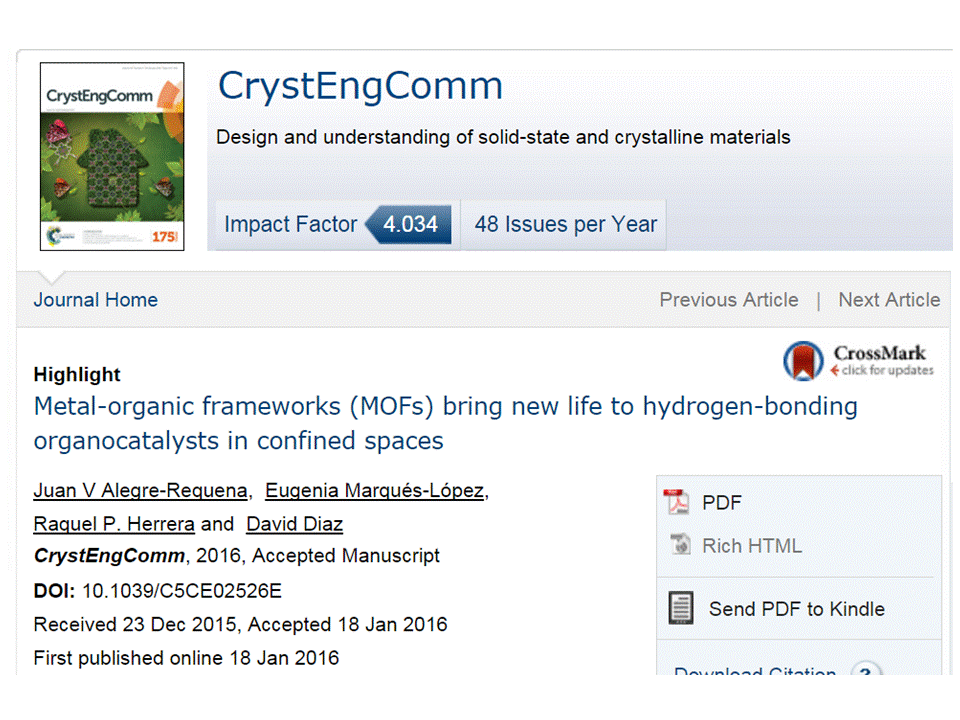 organocatalysis has emerged as promising biomimetic alternative to Lewis acid catalysis. Urea, thiourea and squaramide moieties represent the most common hydrogen-bond donors used for the preparation of these catalysts. However, their significant tendency to undergo self-quenching (self-aggregation) often decrease their solubility and reactivity. Recently, scientists have found a promising way around this problem by immobilizing the hydrogen-bonding organocatalysts on metal-organic frameworks (MOFs). Along with advantageous modular synthesis and recycling properties, the tunable porosity and topology of MOFs also allows fast mass transport and/or interactions with substrates. Herein, we highlight the existing examples dealing with the fabrication and testing of hydrogen-bonding organocatalyst-containing MOFs, providing also our vision for further advances in this area. The results derived from these works will likely serve as inspiration for the future development of superior hydrogen-bonding organocatalysts to accomplish in confined spaces chemical transformations that are either slow or unaffordable under standard homogeneous conditions.











 Herrera-OrganoCatalisis Asimétrica Group