Sandra has just started working with us under an internship program.
She is an enthusiastic student willing to learning a lot 😉
Welcome and enjoy your stay with us!
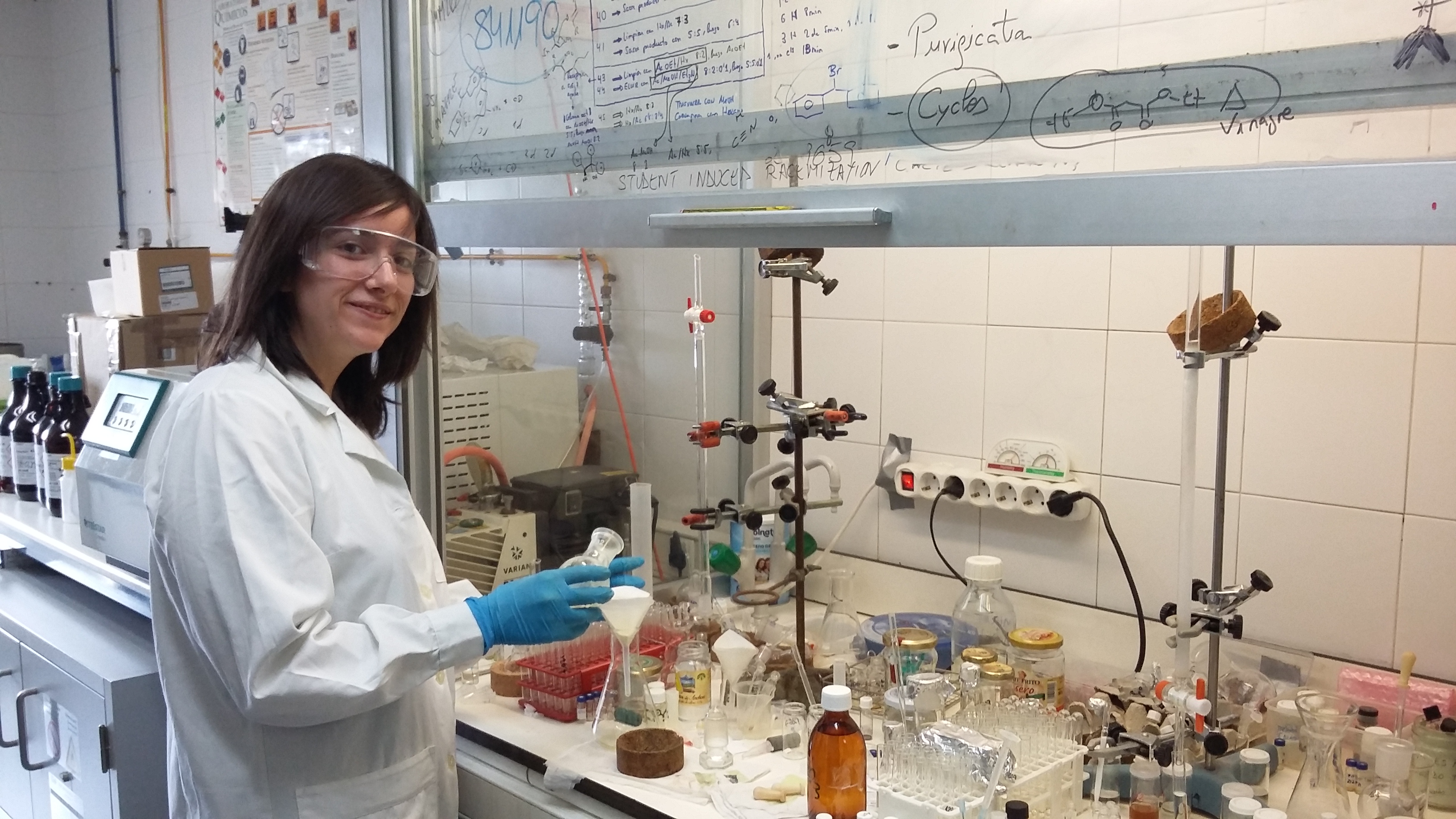
Sandra tries to find room for her filtration in a crowded fume hood… GOOD LUCK!
Sandra has just started working with us under an internship program.
She is an enthusiastic student willing to learning a lot 😉
Welcome and enjoy your stay with us!
Sandra tries to find room for her filtration in a crowded fume hood… GOOD LUCK!
In this review paper, Raquel compiles and describes pioneering and most recent examples of how new stereogenic center can be created, using organocatalytic transfer hydrogenation methodologies.
Organocatalytic Transfer Hydrogenation and Hydrosilylation Reactions. Herrera, R. P. Top. Curr. Chem. 2016, 374, 29. DOI: 10.1007/s41061-016-0032-4. This article is part of the Topical Collection “Hydrogen Transfer Reactions”; edited by Gabriela Guillena, Diego J. Ramón.
Abstract. The reduction of different carbon–carbon or carbon–heteroatom double bonds is a powerful tool that generates in many cases new stereogenic centers. In the last decade, the organocatalytic version of these transformations has attracted more attention, and remarkable progress has been made in this way. Organocatalysts such as chiral Brønsted acids, thioureas, chiral secondary amines or Lewis bases have been successfully used for this purpose. In this context, this chapter will cover pioneering and seminal examples using Hantzsch dihydropyridines 1 and trichlorosilane 2 as reducing agents. More recent examples will be also cited in order to cover as much as possible the complete research in this field.
Keywords. Transfer hydrogenation, Organocatalysis, Hantzsch ester, Trichlorosilane, Phosphoric acid, Aminocatalysis, Thioureas, Lewis bases, Reduction, Hydrosilylation
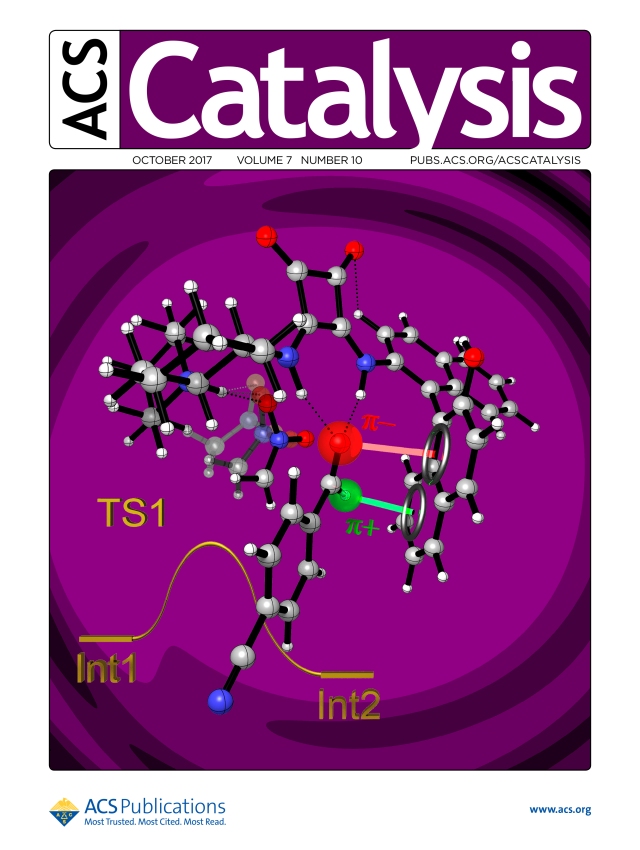
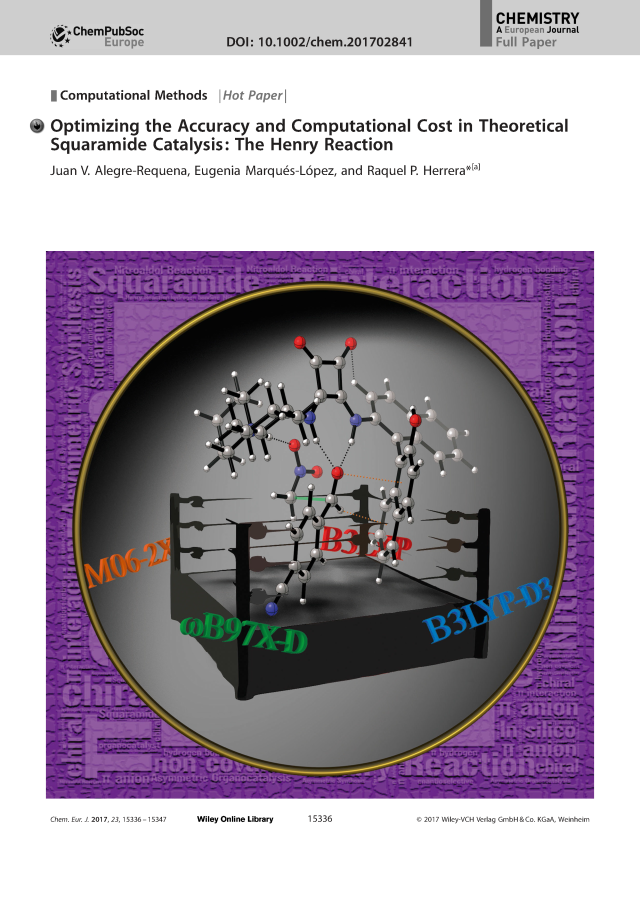
It is well known the lower activity of organocatalysts as compared to most metal catalysts. As a result, developing new and more potent organocatalysts focuses a great deal of interest both for science and chemical industry. Herein, we present our recent result aiming this strategic research line. In particular, we have designed, synthesised and tested a new squaramide which functions as a trifunctional organocatalyst when employed in the Henry reaction, as suggested by several studies carried out and described in this work.
Congratulations and thanks to the team, specially, this time, to Juanvi!
Trifunctional squaramide catalyst for efficient enantioselective Henry reaction activation. Alegre-Requena, J. V.; Marqués-López, E.; Herrera, R. P. Adv. Synth. Catal. 2016, Early view. DOI: 10.1002/adsc.201600046
Abstract. A new class of  trifunctional squaramide catalyst acting by means of multiple interactions has been found in a study of the Henry reaction. Enantiomerically enriched nitroaldol products were obtained in good yields and high enantioselectivities under mild conditions using one of the smallest amounts of organocatalyst reported so far for this reaction (0.25 mol%). The catalyst was able to generate hydrogen bonding and anion-π/hydrogen-π interactions with the substrates, responsible of the improvement in the reactivity and the enantioselectivity of this process. Computational calculations support a mechanistic hypothesis based on an anion-π effect, this being the first example reported in asymmetric catalysis.
Keywords: aldehydes; nitroalkanes; organocatalysis; squaramides; trifunctional catalysts; Henry reaction
This is a new joint paper with our friend Prof. Dr. David Díaz Díaz (Universität Regensburg) and his collaborators, which delves into the properties and applications of aminoindanol urea derivative: a fascinating molecule that has been already more than 10 years present in our research devoted to the organocatalysis .
Two years ago a comprehensive study about its capacity of forming supramolecular gels was accomplished (Chem. Eur. J. 2014, 20, 10720-10731). Now, its ability to selectively recognize fluoride anion among other halides, has just been published. This article is part of the special issue: “Colorimetric and Fluorescent Sensor“.
Congratulations and thank you very much!
Fluoride anion recognition by a multifunctional urea derivative: An experimental and theoretical study. Schiller , J.; Pérez-Ruiz , R.; Sampedro, D.; Marqués-López, E.; Herrera, R. P.; Díaz Díaz, D. Sensors 2016, 16(5), 658. DOI: 10.3390/s16050658.
Abstract. In this work we demonstrate the ability of a multifaceted N,N′-disubstituted urea to selectively recognize fluoride anion (F−) among other halides. This additional function is now added to its already reported organocatalytic and organogelator properties. The signaling mechanism relies on the formation of a charge-transfer (CT) complex between the urea-based sensor and F− in the ground state with a high association constant as demonstrated by absorption and fluorescence spectroscopy. The nature of the hydrogen bonding interaction between the sensor and F− was established by 1H-NMR studies and theoretical calculations. Moreover, the recovery of the sensor was achieved by addition of methanol.
Key words. fluoride; anion recognition; sensor; N,N′-disubstituted urea; charge-transfer complex; association constant; absorption spectroscopy; fluorescence spectroscopy
More than 2000 people ran last 10th april in the “II Carrera ATADES por un nuevo cole“. The race took place in Zaragoza to fund-raise the construction of a new special education school. That morning a lively and exciting atmosphere filled the Zaragoza’s José Antonio Labordeta Park. All runners and their families and companions enjoyed the event!


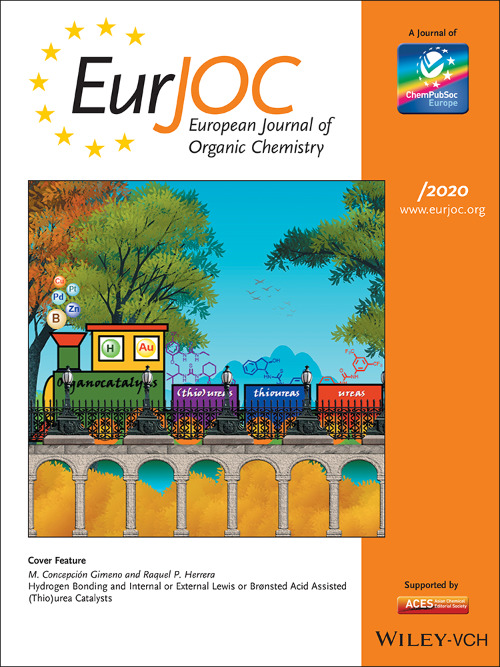
Squaramides are intriguing molecular structures intensively employed in the last decade as organocatalysts. That is why they entered to be part of the research focuses of H-OCA, dedicated -as you certainly know- to the asymmetric organocatalysis field. Along to this particular application of squaramides compounds, we have broaden our scientific investigation on this chemical family. In this context , this new work have been carried out in collaboration with the research group of our collegue and friend Dr. David Díaz Díaz (Universität Regensburg), who has vast experience in the field of gels. It is well-known the self-assembled capacity of squaramides and the associated problems when they are used as catalysts. Oddly enough, this property is the core of their capacity to form supramolecular stable alcogels as it is excellently described herein. This article is part of a themed collection: Gels.
Congratulations and thanks a lot to everyone for making possible this fascinating piece of work!
“Self-assembled fibrillar networks of a multifaceted chiral squaramide: supramolecular multistimuli-responsive alcogels” Schiller, J.; Alegre-Requena, J. V.; Marqués-López, E.; Herrera, R. P.; Casanovas, J.; Alemán, C.; Díaz Díaz, D. Soft Matter, 2016, Advance Article. DOI: 10.1039/C5SM02997J
Abstract. Chiral N,N′-disubstituted squaramide 1 has been found to undergo self-assembly in a variety of alcoholic solvents at low concentrations leading to the formation of novel nanostructured supramolecular alcogels. The gels responded to thermal, mechanical, optical and chemical stimuli. Solubility studies, gelation ability tests and computer modeling of a series of structurally related squaramides proved the existence of a unique combination of non-covalent molecular interactions and favorable hydrophobic/hydrophilic balance in 1 that drive the anisotropic growth of alcogel networks. The results have also revealed a remarkable effect of ultrasound on both the gelation kinetics and the properties of the alcogels.
Sofía visited our lab and enjoyed playing with us pretending to be a chemist for one day. Adults enjoyed maybe even more than young Sofía 😉
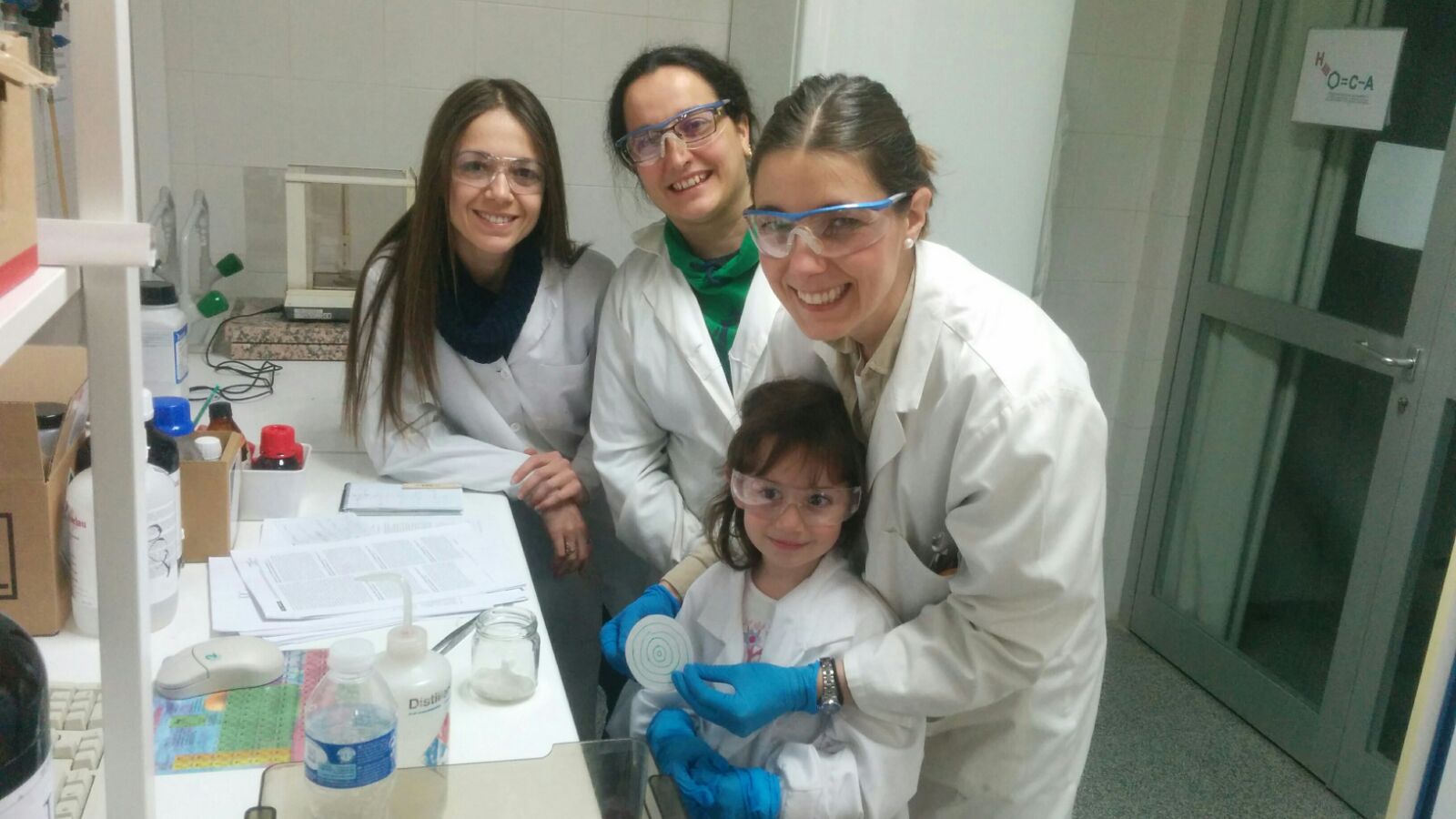
Rosa, Raquel, Maru and Sofía
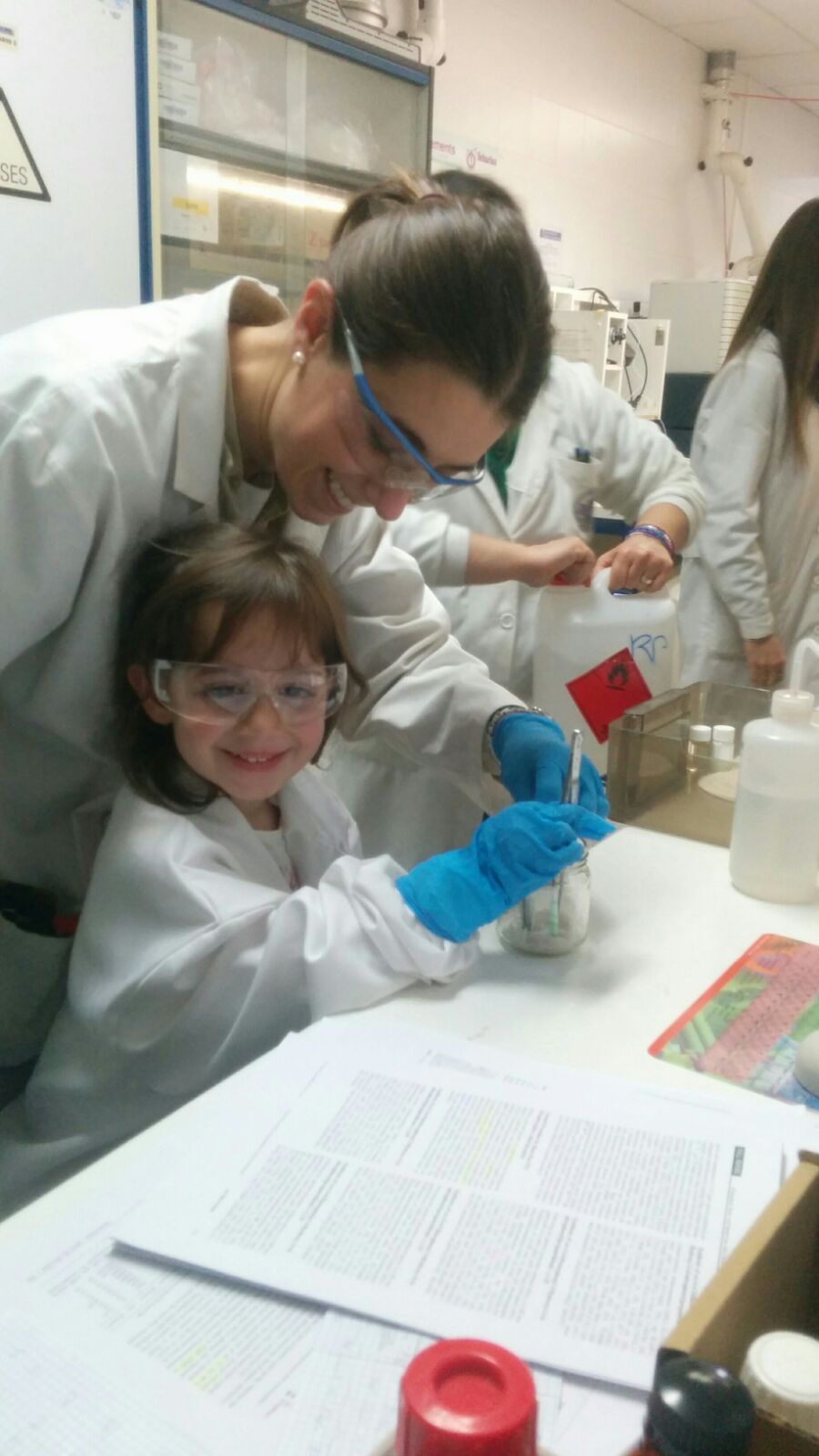

We hope a better future for those that now are just children or young people than that predicted by current forecasts. Let’s bet on Science and our future scientists to reach that bright world that we wish for our next generations!
Last Easter Raquel run in a charity race celebrated in her hometown, El Campello (Alicante, Spain). She got a meritory third position… Congratulations!


Our most recent review paper has just come out off the press. It has been published as open access in Beilstein J. Org. Chem. In this paper, by gathering relevant and illustrative examples, we show the ability of conferring bifunctionality to the catalyst of aminoindanol, one key scaffold in the field of organocatalysis. We invite you to browse through this newly published paper and learn about this amazing structure. We hope you enjoy it!
“The aminoindanol core as a key scaffold in bifunctional organocatalysts” , I. G.; Beilstein J. Org. Chem. 2016, 12, 505–523; doi:10.3762/bjoc.12.50 This article is part of the Thematic Series “Bifunctional catalysis”. Guest Editor: D. J. Dixon.
Thank you and congrats!
Abstract. The 1,2-aminoindanol scaffold has been found to be very efficient, enhancing the enantioselectivity when present in organocatalysts. This may be explained by its ability to induce a bifunctional activation of the substrates involved in the reaction. Thus, it is easy to find hydrogen-bonding organocatalysts ((thio)ureas, squaramides, quinolinium thioamide, etc.) in the literature containing this favored structural core. They have been successfully employed in reactions such as Friedel–Crafts alkylation, Michael addition, Diels–Alder and aza-Henry reactions. However, the 1,2-aminoindanol core incorporated into proline derivatives has been scarcely explored. Herein, the most representative and illustrative examples are compiled and this review will be mainly focused on the cases where the aminoindanol moiety confers bifunctionality to the organocatalysts.
Keywords. aminocatalysis; 1,2-aminoindanol; bifunctional; organocatalysis; hydrogen bonding
On 13th march, Raquel run the solidary race “10K Solidaria Parque agua“, winning again the silver medal as last month in this other one, “7K Enfermedades Raras – Feeteg“.
Congratulations!










 Herrera-OrganoCatalisis Asimétrica Group