-
-

Scientias - 2025 Multicomponent Reactions. R. P. Herrera; E. Marques-López (Eds.). Wiley, 2015

Topical Collection “Recent Advances in Organocatalysis”

CATALYSTS: Special Issue “Hydrogen Bonding Activation”

CATALYSTS: Special Issue “Hydrogen Transfer Reactions”


Categories
Tags
- 2015
- 2016
- 2017
- 2018
- 2019
- 2020
- 2021
- 2022
- 2023
- 2024
- 2025
- 2026
- Adv. Synth. Catal.
- Asymmetric organocatalysis
- Award
- Bachelor thesis
- Biological activity
- Birthday
- Cancer
- Chem. Eur. J
- Christian Ascaso Alegre
- Collaboration
- Conference
- Congress
- David Díaz Díaz
- Defense
- Dihydropyridines
- Eduardo Romanos
- Eugenia Marqués-López
- Fanny Zarate
- Fernando Auria-Luna
- Fun
- Gel
- Gold
- Goodbye
- Guillermo Canudo
- Guillermo Canudo Barreras
- Henry reaction
- Heterocycle
- Internship
- Isaac G. Sonsona
- ISQCH
- Japanese restaurant
- Juan Carlos Pérez Sánchez
- Juan Mangas-Sanchez
- Juan V. Alegre-Requena
- M. C. Gimeno
- M. Concepción Gimeno
- Molecules
- One-pot synthesis
- Organocatalysis
- PhD thesis
- Poster
- Prof. Gimeno
- Publication
- Race
- Raquel P. Herrera
- Review
- Roberto Berbés Martínez
- Rosa Ortiz
- Sandra Ardevines
- Sandra Ardevines Asín
- Sandra Muñiz Bustín
- Sara Gil
- Scientific dissemination
- Seminar
- Solidarity
- Squaramide
- Symposium
- Synthesis
- Thiourea
- University of Zaragoza
- Urea
- Vanesa Fernández-Moreira
- Welcome
-
Join 25 other subscribers
Meta
Available “Early View” of the last publication with David and Juanvi
Self‐Assembly of Hollow Organic Nanotubes Driven by Arene Regioisomerism, Alegre-Requena, J. V.; Herrera, R. P.; Díaz Díaz, D. ChemPlusChem 2020, https://doi.org/10.1002/cplu.202000473
Abstract. Arene regioisomerism in low‐molecular‐weight gelators can be exploited as a tool to modulate the micro‐structures of the corresponding xerogel networks by using the three different possible substitution patterns ortho, meta and para. This aromatic regioisomer‐driven strategy has been used with a cholesterol‐based gelator to prepare hollow self‐assembled organic nanotubes (S‐ONTs) with inside and outside diameters of ca. 35 and 140 nm, respectively. Electron microscopy imaging and theoretical calculations were employed to rationalize the formation mechanism of these S‐ONTs. From the three possible regioisomers, only the ortho‐disubstituted cholesteryl‐based gelator showed the optimal angle and distance between substituents to afford the formation of the cyclic assemblies required for nanotube growth by assembling 30–40 units of the gelator. This study opens fascinating opportunities to expand the synthesis of controllable and unique microstructures by modulating geometrical parameters through aromatic regioisomers.
Keywords. Gel, nanotubes, regioisomers, self-assembly, supramolecular chemistry
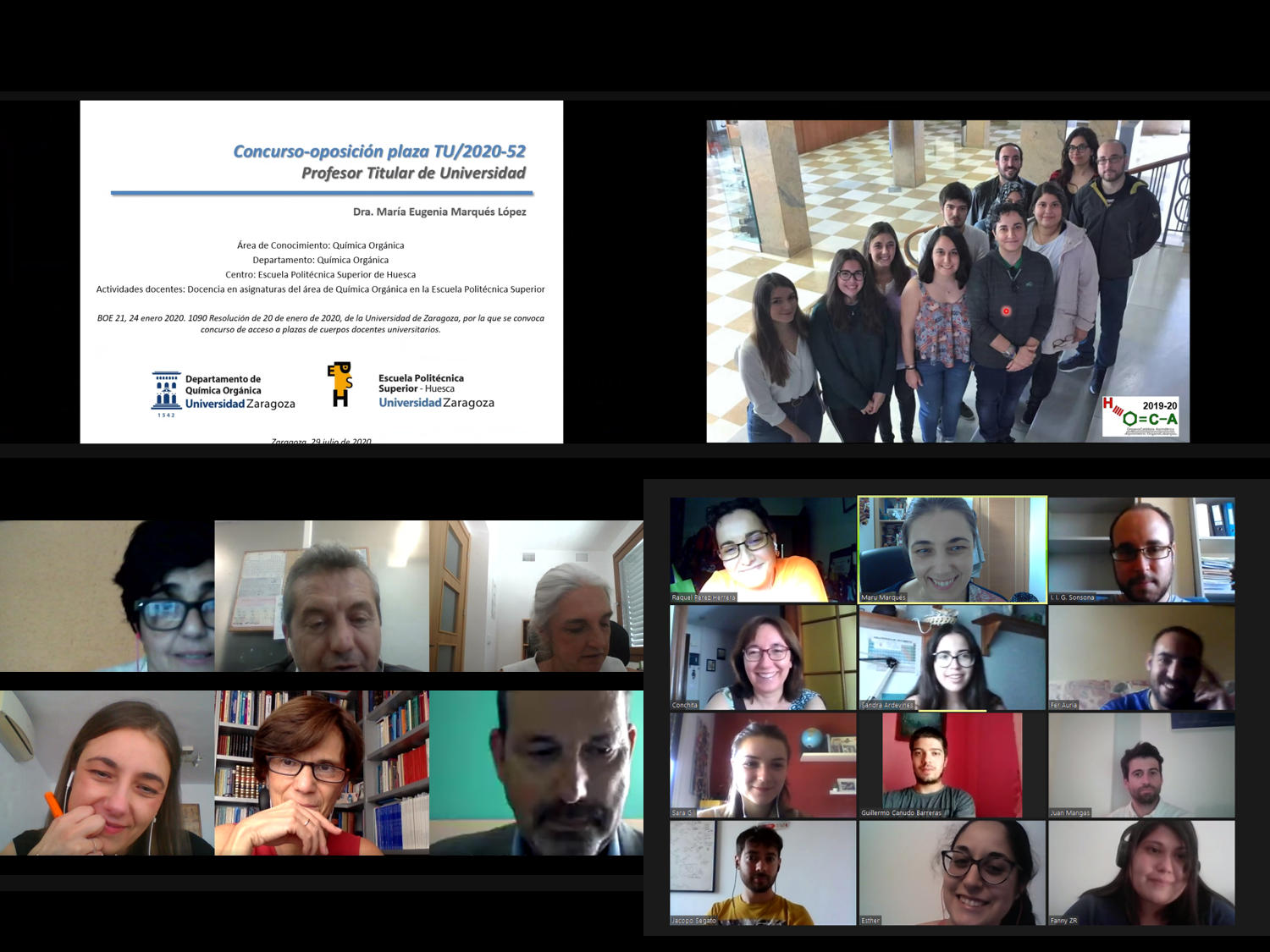
Maru’s promotion!
Last Wednesday, 29th July, was a great and important day for HOCA group. My right hand and good friend Maru, became Associate Professor after an excellent and emotive public exam.
Well done Maru and congratulations from all of us!!!!!
Now, enjoy the summer with your family!
Raquel
Last results on heterocycles biological properties studies have been recently spread online
I Multifunctional Metallodrugs in Diagnosis and Therapy Meeting
MultiMetDrugs (27 de Julio)
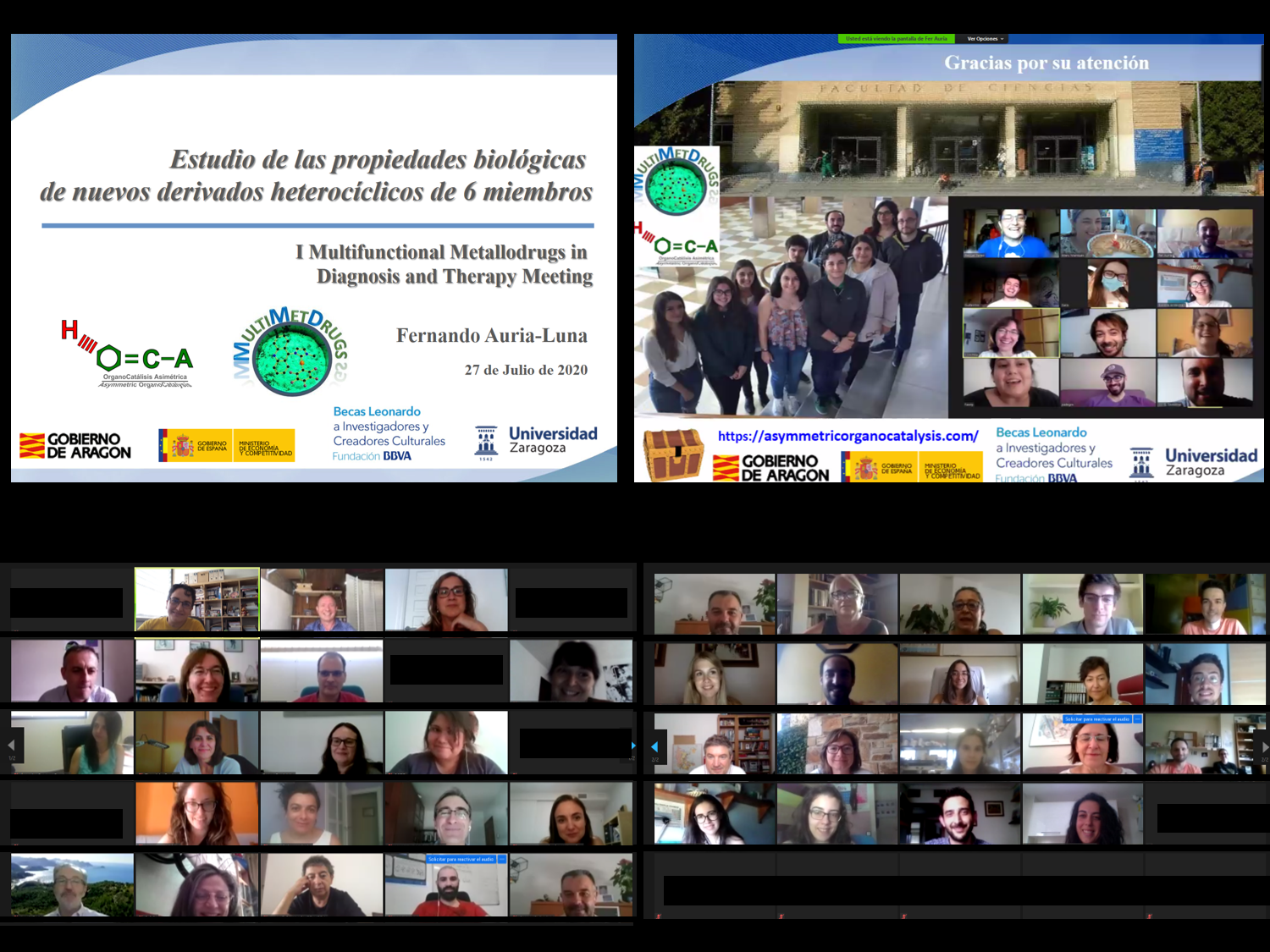
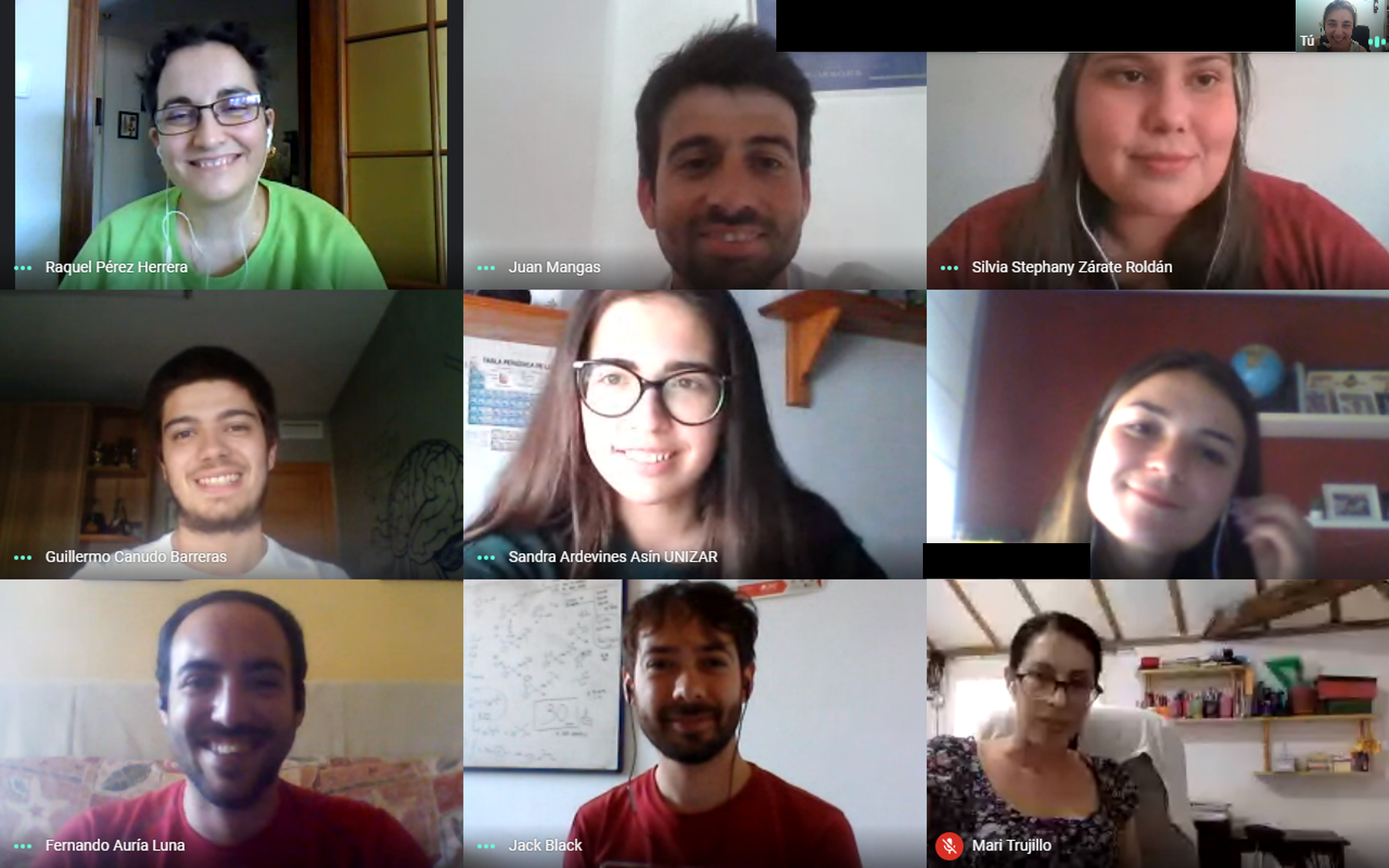
In the frame of the 1st Group Meeting of the Spanish network MultiMetDrugs coordinated by Prof. Gimeno’s group, Fer faced the prelude to his doctoral thesis defense presenting his last results in front of many little screens.
Well done!! Congratulations!
HOCA initiation in DNA binding studies of compounds obtained through green methods
Ultrasound-assisted multicomponent synthesis of 4H-pyrans in water and DNA binding studies, Auria-Luna, F.; Fernández-Moreira, V.; Marqués-López, E.; Gimeno, M. C.; Herrera, R. P. Sci. Rep. 2020 , 10, 11594. https://doi.org/10.1038/s41598-020-68076-1
Abstract. A simple approach to synthesize new highly substituted 4H-pyran derivatives is described. Efficient Et3N acts as a readily accessible catalyst of this process performed in pure water and with only a 20 mol% of catalyst loading. The extremely simple operational methodology, short reaction times, clean procedure and excellent product yields render this new approach extremely appealing for the synthesis of 4H-pyrans, as potentially biological scaffolds. Additionally, DNA interaction analysis reveals that 4H-pyran derivatives behave preferably as minor groove binders over major groove or intercalators. Therefore, this is one of the scarce examples where pyrans have resulted to be interesting DNA binders with high binding constants (Kb ranges from 1.53 × 10⁴ M−1 to 2.05 × 10⁶ M−1).
Key words. Multicomponent reaction; 4H-Pyrans; Water as solvent; DNA; Ultrasound; Organocatalysis
Posted in DNA, Heterocycle, Multicomponent reaction, Organocatalysis, Publication, Pyrans, Research, Synthesis
Tagged 2020, 4H-Pyrans, Collaboration, DNA, Eugenia Marqués-López, Fernando Auria-Luna, Green chemistry, Multicomponent reaction, Organocatalysis, Prof. Gimeno, Publication, Raquel P. Herrera, Scientific Reports, Synthesis, Ultrasound, Water
Leave a comment
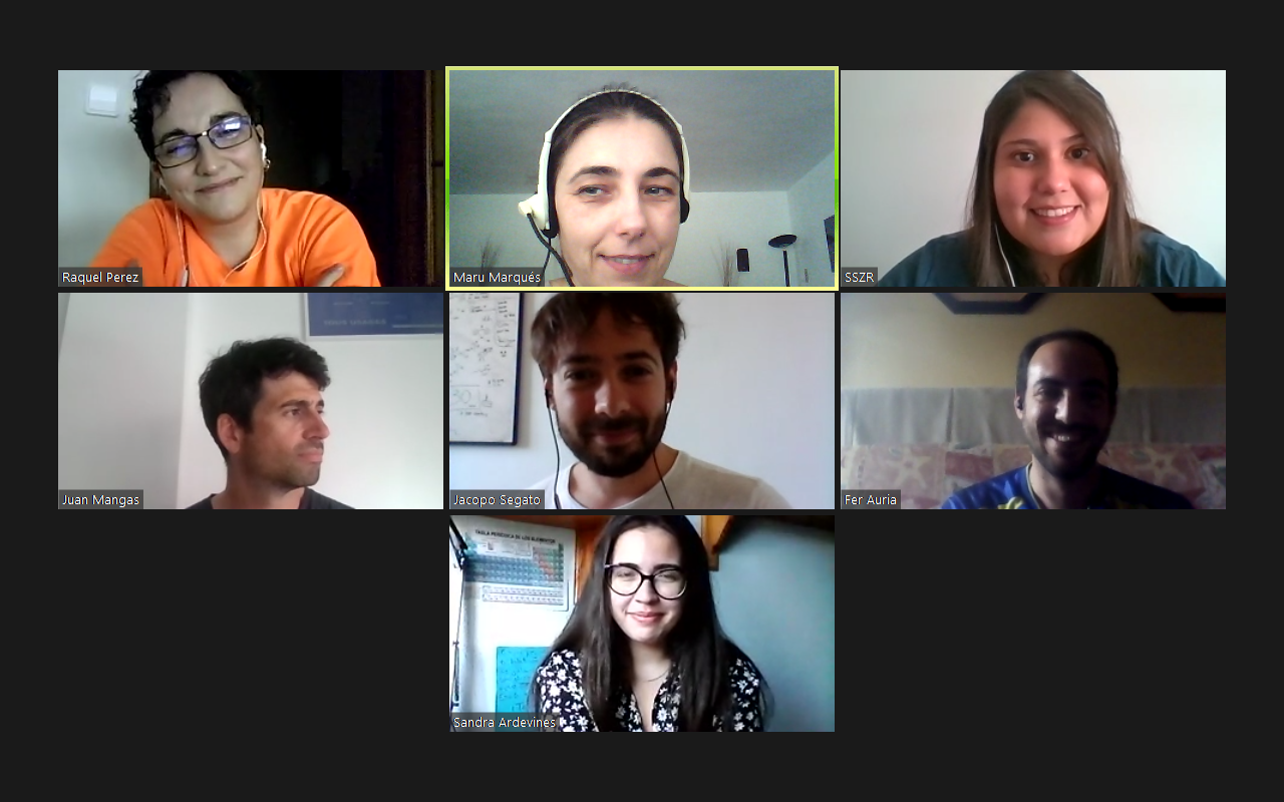
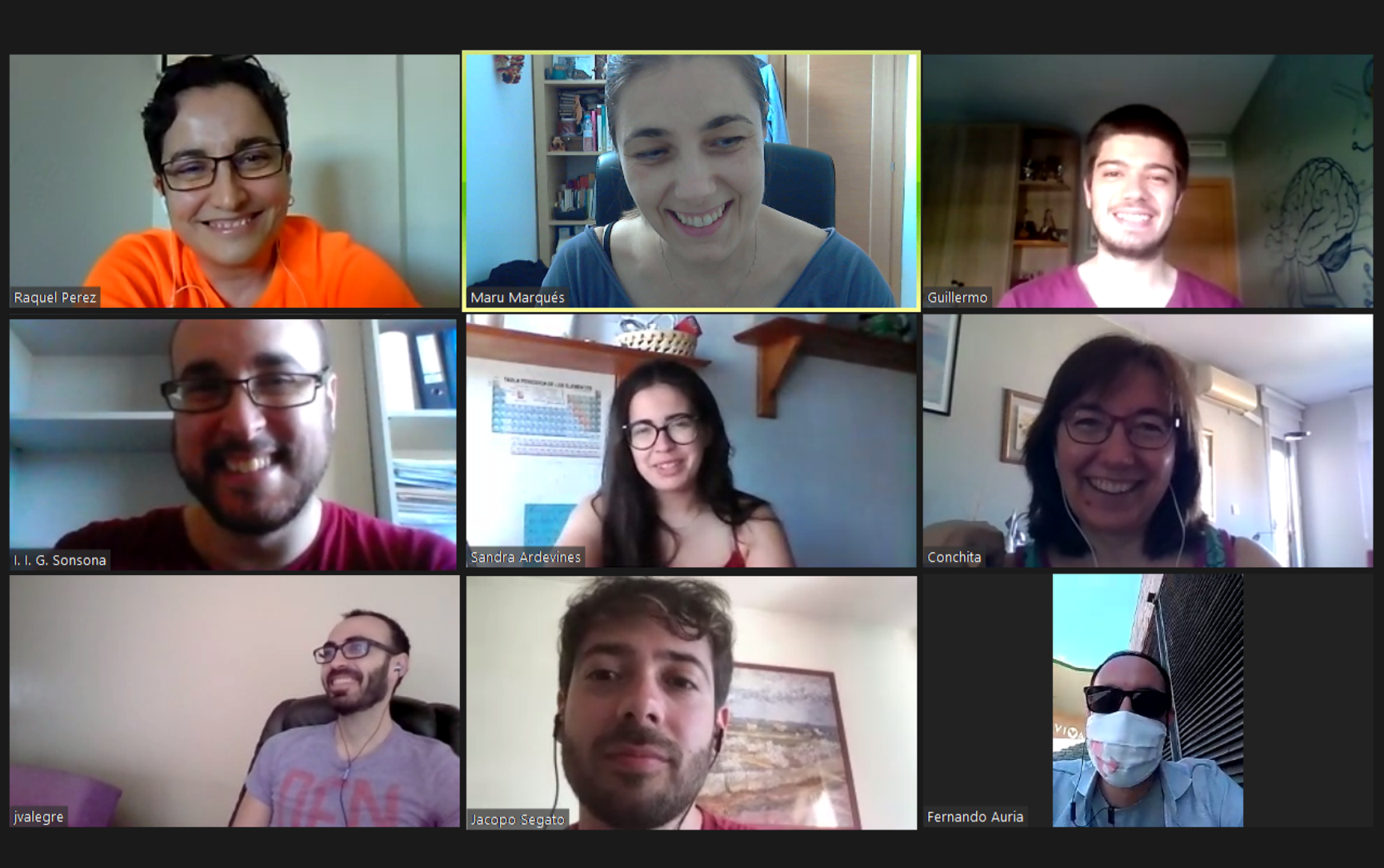
HOCA meets to learn from the youngest!
Undergrads made a rehearsal before their official Bachelor thesis presentations.
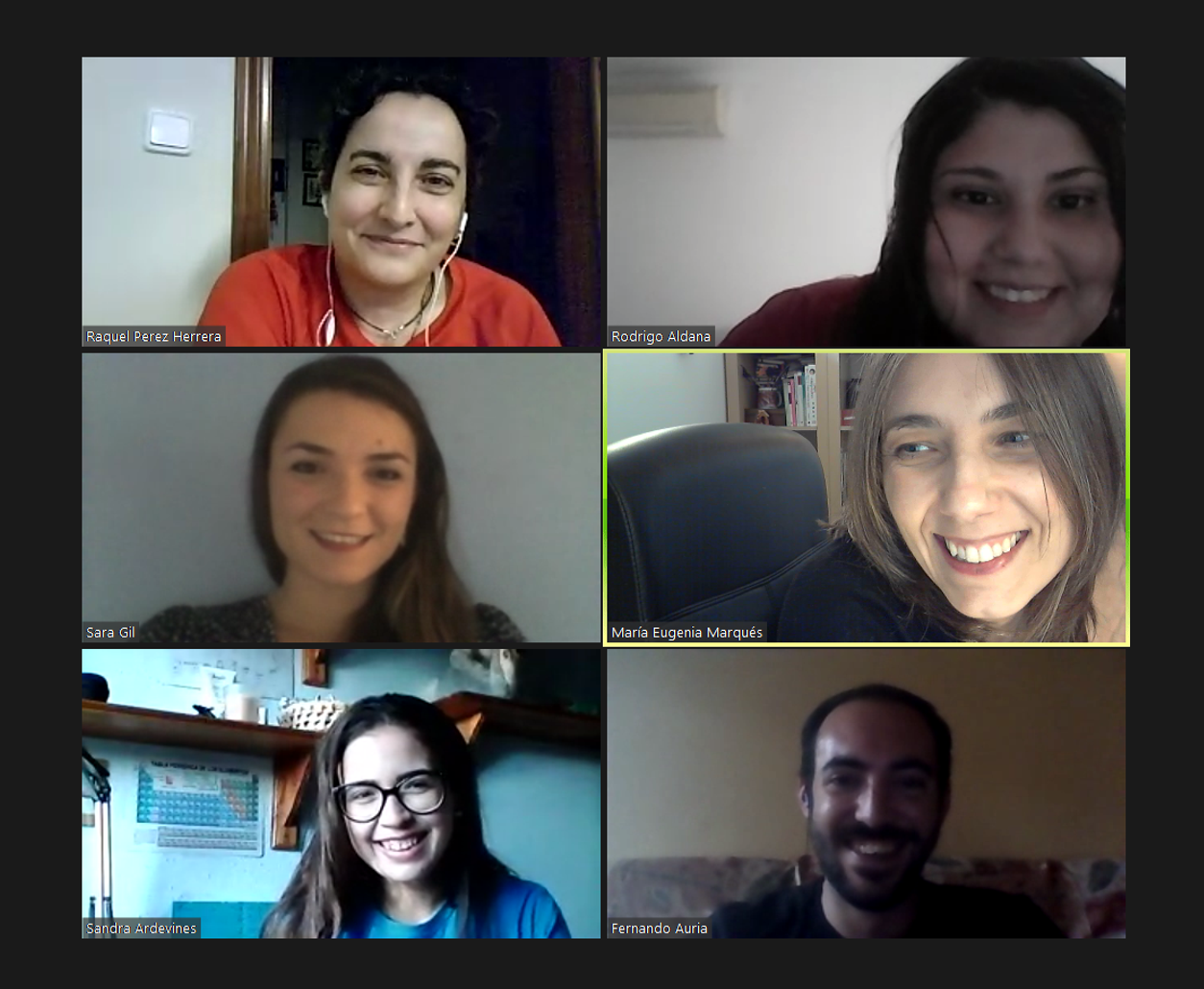
We all enjoyed a lot with such a nice speakers! Guillermo and Sandra, well done!
Posted in B.Sc. Thesis, Defense, Seminar
Tagged 2020, Bachelor thesis, Guillermo Canudo, Sandra Ardevines, Seminar, TFG
Leave a comment
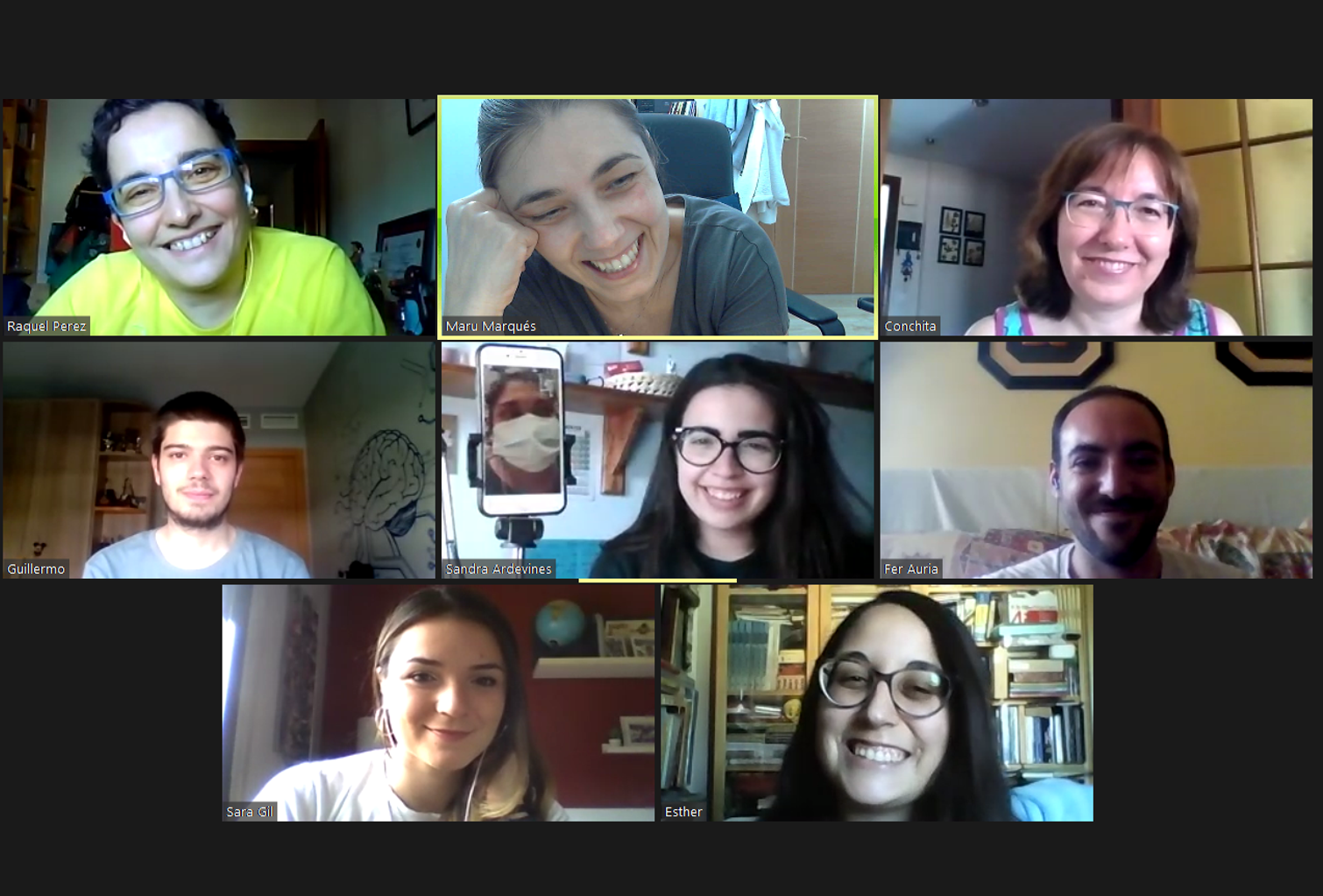
Happy birthday, Esther!!!!!
Posted in Birthday, Fun
Tagged 2020, Birthday, Esther Inmaculada Delicado Correa, Fun
Leave a comment