Last September 26th, Fernando presented to the Doctoral Committee of the Organic Chemistry Program, a summary of the research advances of his second year of doctorate.
He did it excellent, congratulations and good luck in your 3rd year!
Last September 26th, Fernando presented to the Doctoral Committee of the Organic Chemistry Program, a summary of the research advances of his second year of doctorate.
He did it excellent, congratulations and good luck in your 3rd year!
Our friend and colleague, David Díez from the University of Regensburg, was in Zaragoza last Monday (2nd October). We enjoyed a lot talking about chemistry and much much more. Thank you for coming!
See you soon “here” or “there”… Tschüss!
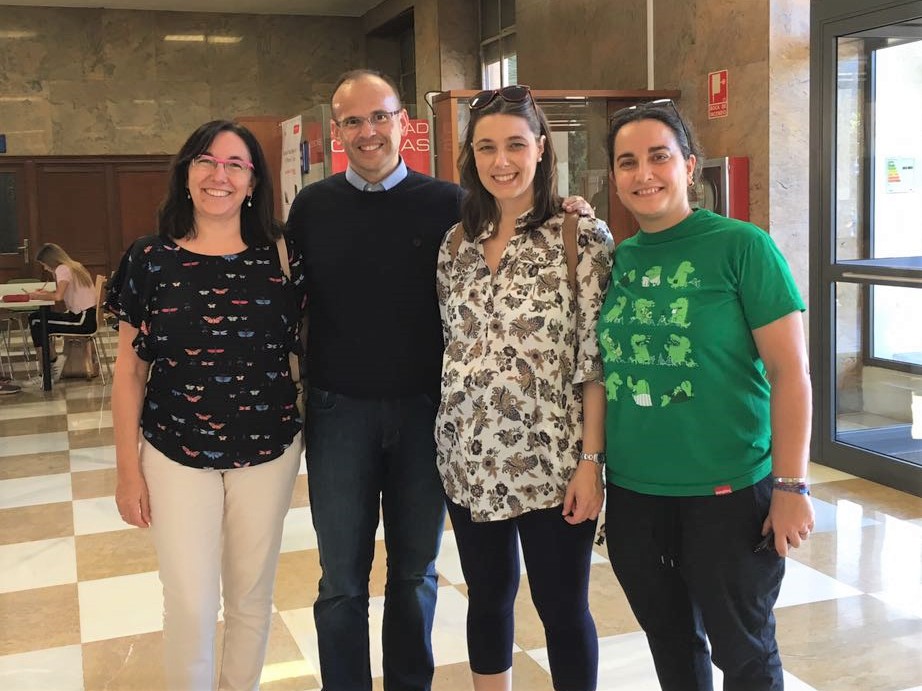
Conchita, David, Maru and Raquel

Raquel, David, Juanvi, Maru and Isaac
As each year on the last Friday in September, last Friday took place the European Researchers’ Night. This is a big event dedicated to popular science and fun learning, celebrated simultaneously in 300 cities across Europe and in neighbouring countries. Raquel, Sandra and Isaac were in CAIXAFORUM ZARAGOZA explaining to curious people about quirality and other interesting things.
For sure, all of them enjoyed a lot!!
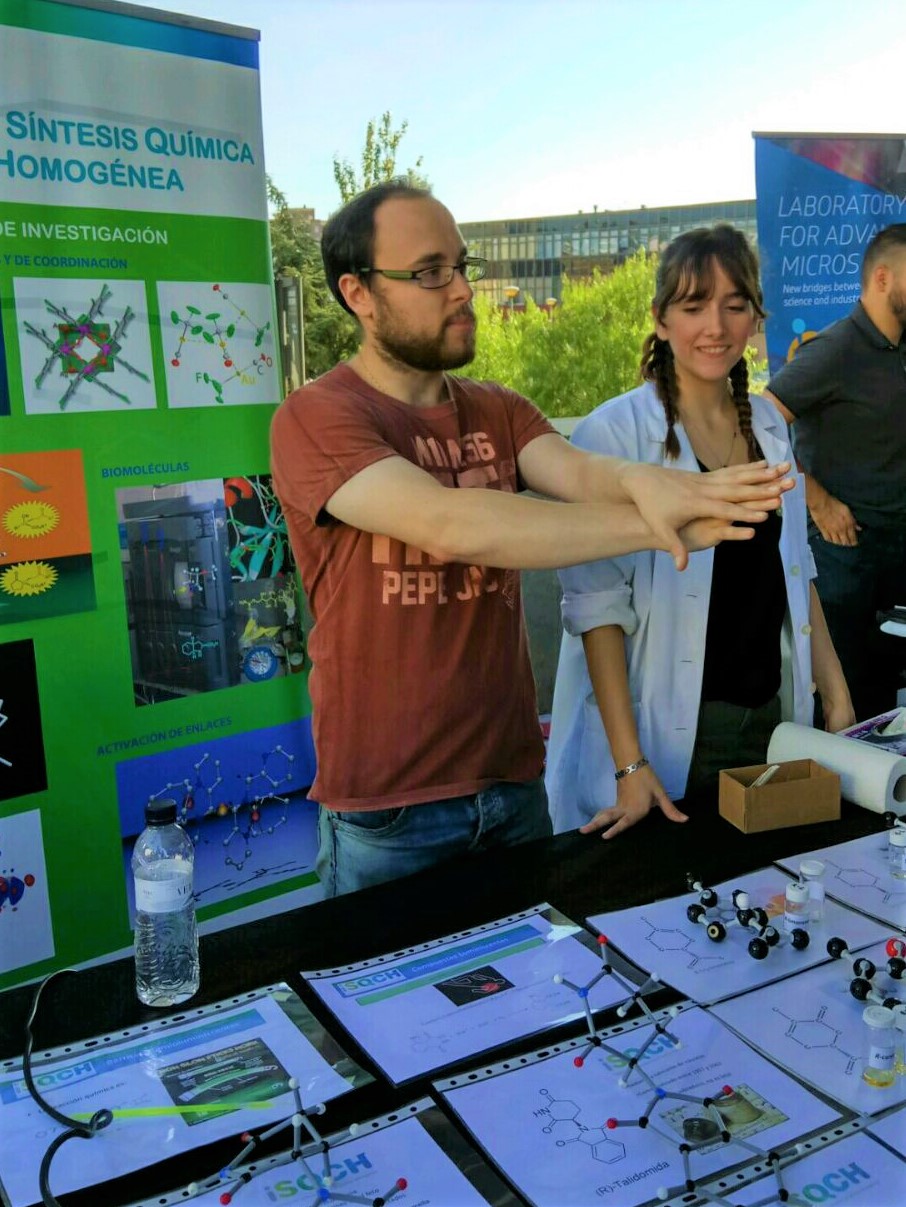
Isaac and Sandra

Raquel
Last friday (September, 29th) Sandra invited us to eat delicious homemade coffee flans. Mmmm!
Thank you very much 😉

Sofía, Juanvi, Sandra, Maru, Raquel, Isaac, Fernando (right to left).
Maru attended to the 29th Annual EAIE Conference and Exhibition which took place from 12–15 September 2017 at the Seville Conference and Exhibition Centre (FIBES). It was an amazing event with 6000 participants from 95 countries!
She represented the Escuela Politécnica Superior (Technological College) of the University of Zaragoza as the Assistant Director for International Affairs. There she met coleagues from partner Universities to intensify the current collaborations; and also other Universities for exploring new vias of cooperation.
she really enjoyed being in her hometown!


… when they are almost finished!
Enjoy the last days 😉
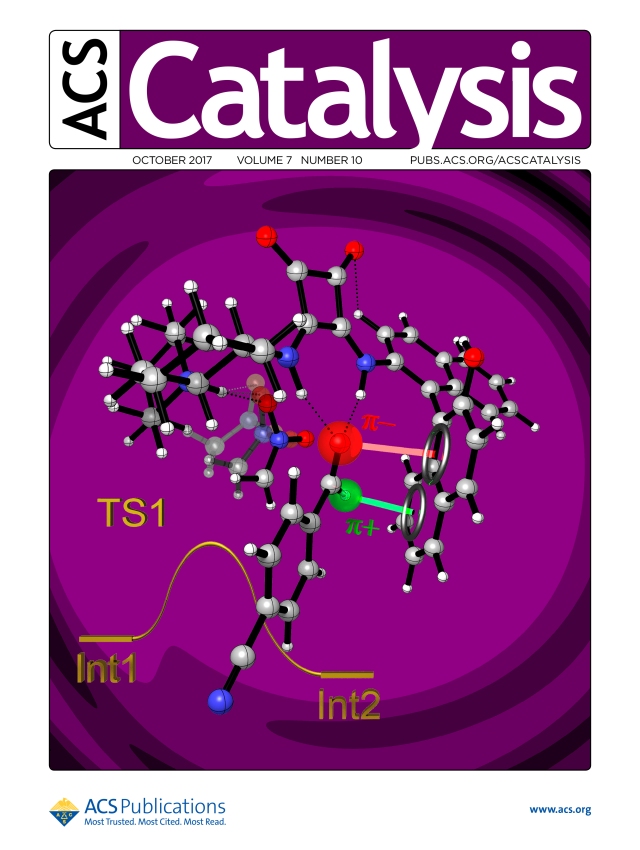
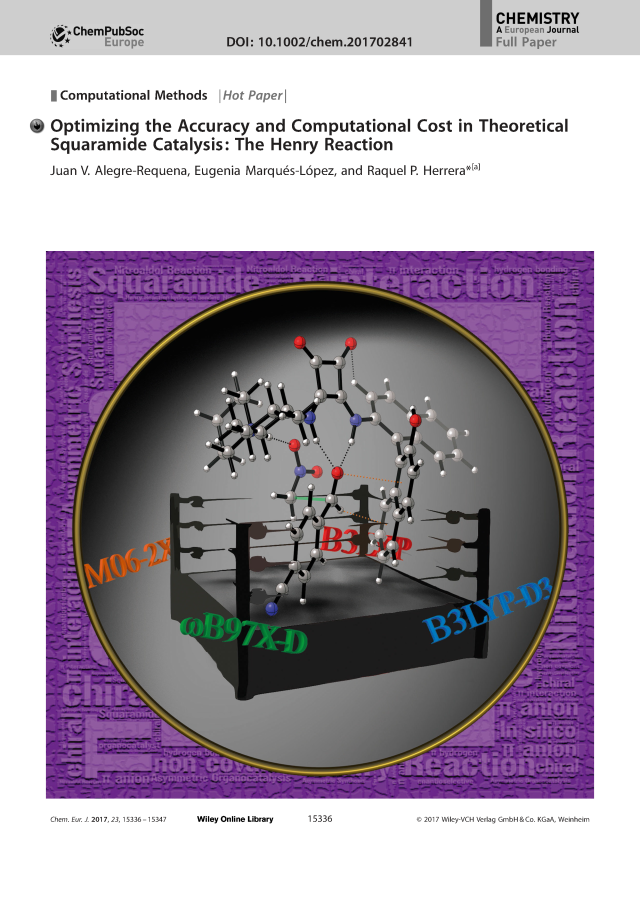
We have just published very interesting studies about the Henry reaction, which allow understanding more in detail the activation of the substrates by a very effective squaramide. Enjoy them…
Congratulations Juanvi!
“Push−Pull π+/π−” (PPππ) Systems in Catalysis, Alegre Requena J. V.; Marqués-López, E.; Herrera, R. P. ACS Catal. 2017, DOI: 10.1021/acscatal.7b02446.
Abstract. This computational and experimental study represents the first case where “push-pull π+/π-” (PPππ) systems have shown a concrete application in Chemistry apart from in spectral tuning. The most notable finding of this investigation was that a mode of interaction unprecedented in catalysis, a PPππ system, played a crucial role in the Henry reaction catalyzed by a NOBIN-based squaramide. The results show that the PPππ system stabilizes the most favorable pathway, P1, with 2.7-4.7 kcal/mol. This is vital for the differentiation in energy of P1 over the rest of the pathways and directly affects both the reactivity and stereoselectivity of this reaction. These results suggest that PPππ systems are promising tools with great potential for catalysis.
Optimizing Accuracy and Computational Cost in Theoretical Squaramide Catalysis: the Henry Reaction, Alegre Requena J. V.; Marqués-López, E.; Herrera, R. P. Chem. Eur. J. 2017, DOI: 10.1002/chem.201702841.
Abstract. This study represents the first example where the accuracy of different combinations of density functional theory (DFT) methods and basis sets has been compared in squaramide catalysis. After an optimization process of the precision obtained and the computational time required in the computational calculations, highly precise results were achieved compared to the experimental outcomes while using the least amount of time as possible. Here, we have explored computationally and experimentally the mechanism of squaramide-catalyzed Henry reaction. This is a complex reaction of about 100 atoms and a great number of diverse non-covalent interactions. Moreover, this research is one of the scarce examples where the organocatalyst acts in a trifunctional manner and is the first investigation in which a trifunctional squaramide catalyst has been employed. Functional ωB97X-D showed the best results when used with different versions of the 6-311 basis sets, leading to highly accurate calculations of the outcomes of the Henry reaction using nine aldehydes with different structural characteristics. Furthermore, in these relatively large systems, the use of a split-valence triple-zeta basis set saves a large amount of time compared to using larger basis sets that are sometimes employed in organocatalytic studies, such as the TZV and Def2TZV basis set families.
Thank you for these delicious cookies!

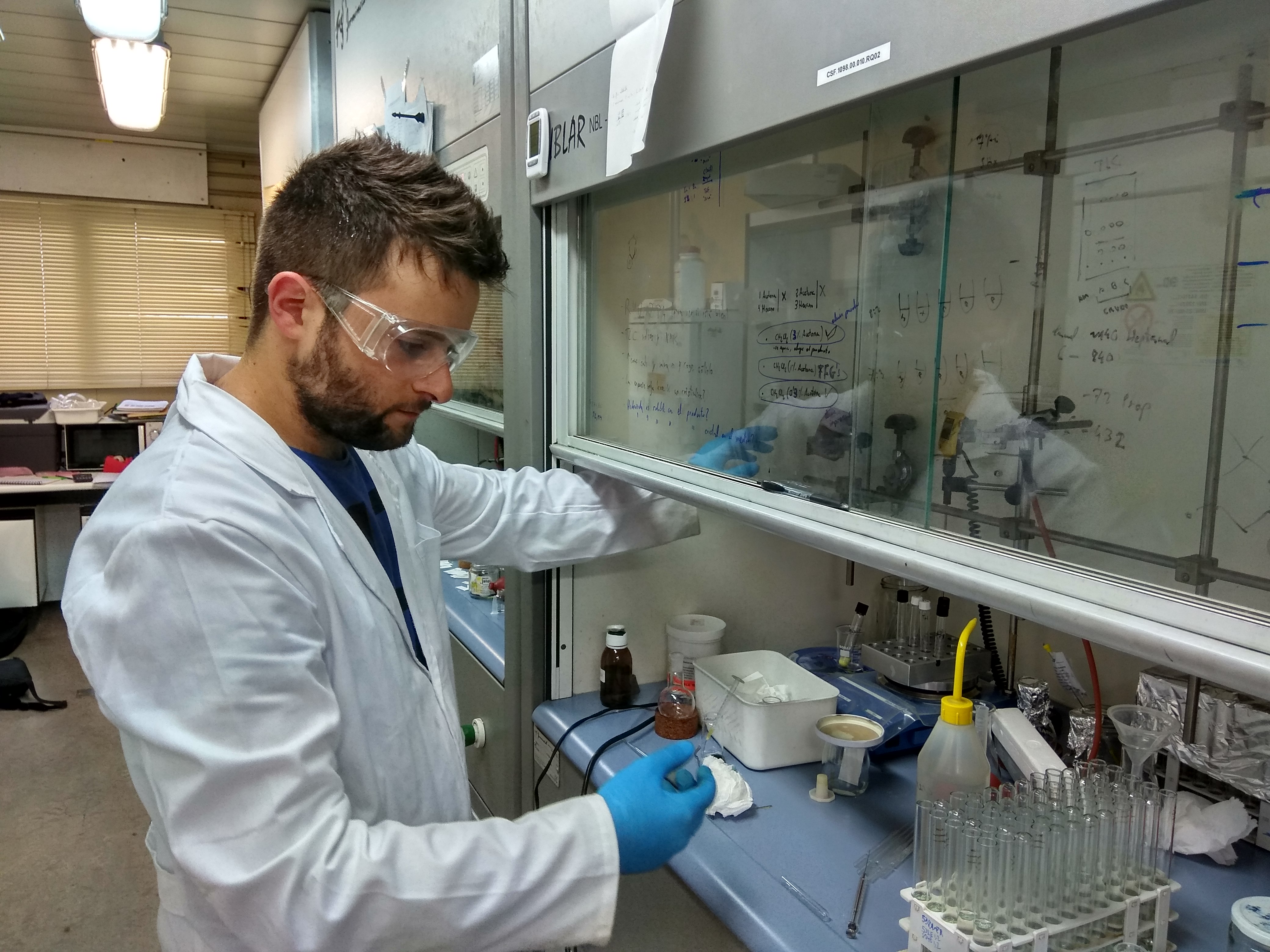
Roberto will be with us this summer working in the lab before leaving for an Erasmus academic stay in September.











 Herrera-OrganoCatalisis Asimétrica Group