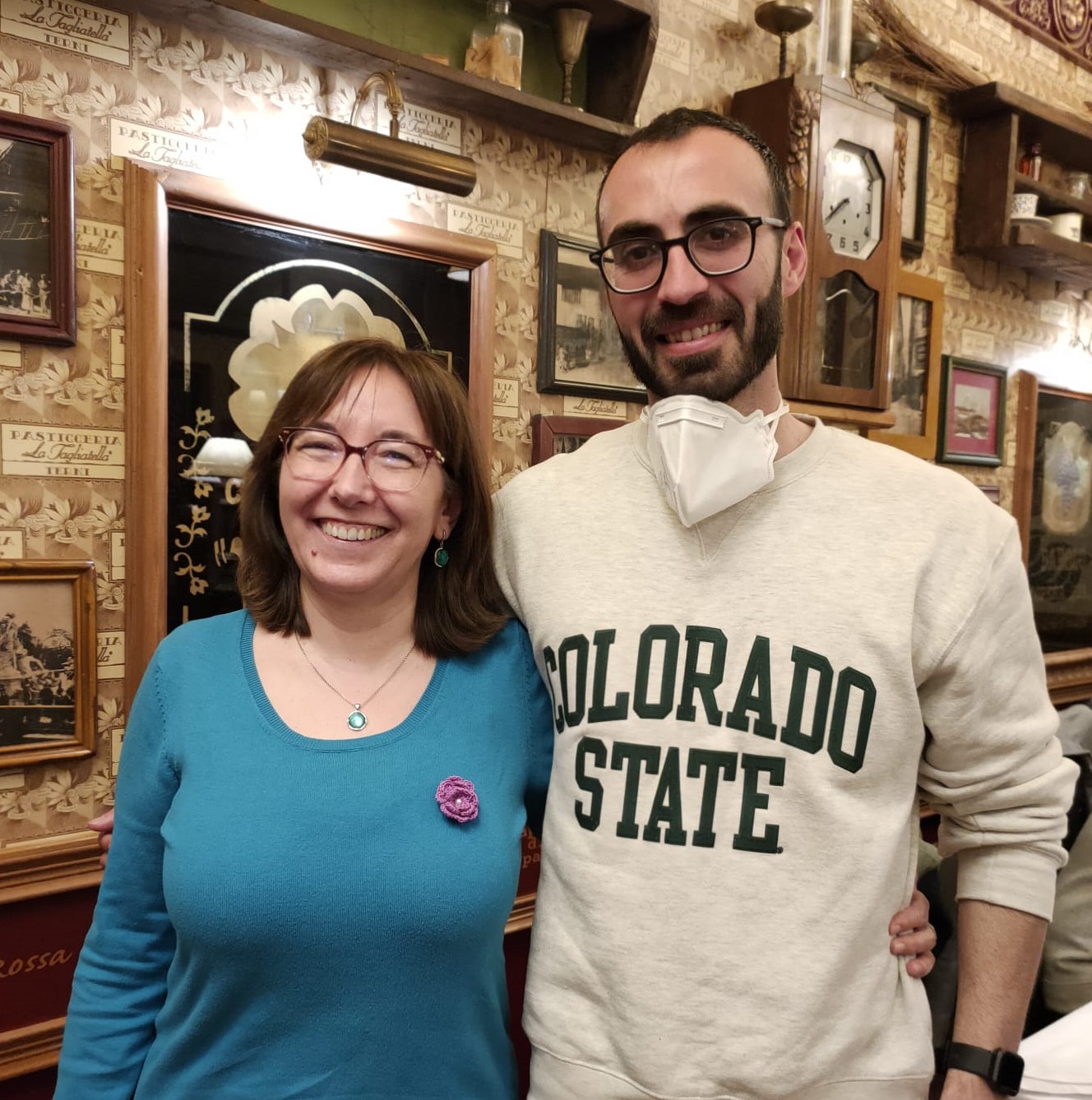
Gemma Triola visited us today!

Dr. Gemma Triola from IQAC (Barcelona), visited today ISQCH to tell us about Chemical biology of lipids and proteins. Tools to study Lipid-Proteins interactions. Very interesting talk!

As nice as always to share some time with a good old friend!

Thanks for visiting us! Come back soon 😉

Posted in Conference, ISQCH | Tagged , , , , | Leave a comment

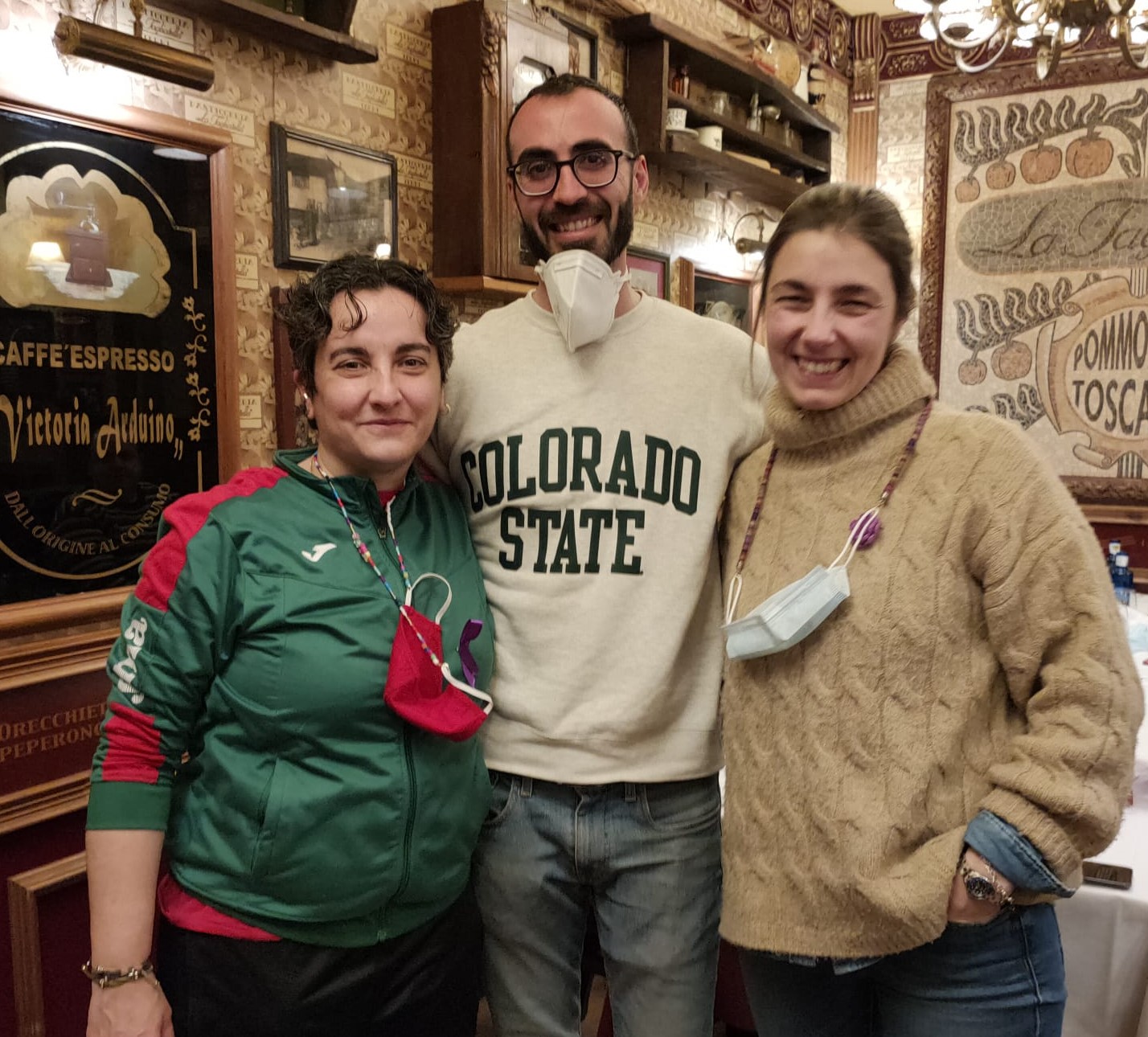
Juanvi is back to Zaragoza!!! Welcome!!!

This “alicantino” came to Zaragoza for the first time in 2012 for an internship in our group. It seems Cierzo was not an issue 😉 and when he finished his Degree in Chemistry came back to study a Master (2014) and completed his Ph.D. with us (2017). Later he moved to USA (2018-2021), where he has been working as a postdoctoral researcher associate with Dr. Robert S. Paton in the Department of Chemistry at Colorado State University.
Recently, he has been appointed as a Juan de la Cierva-Incorporation Fellow for the Science and Innovation Spanish Ministry to work together with Prof. Gimeno at the ISQCH (April 2022).
Welcome back to Zaragoza! Welcome back at home!

Posted in Computational chemistry, Group member, Postdoc, Promotion | Tagged , , , , , | Leave a comment

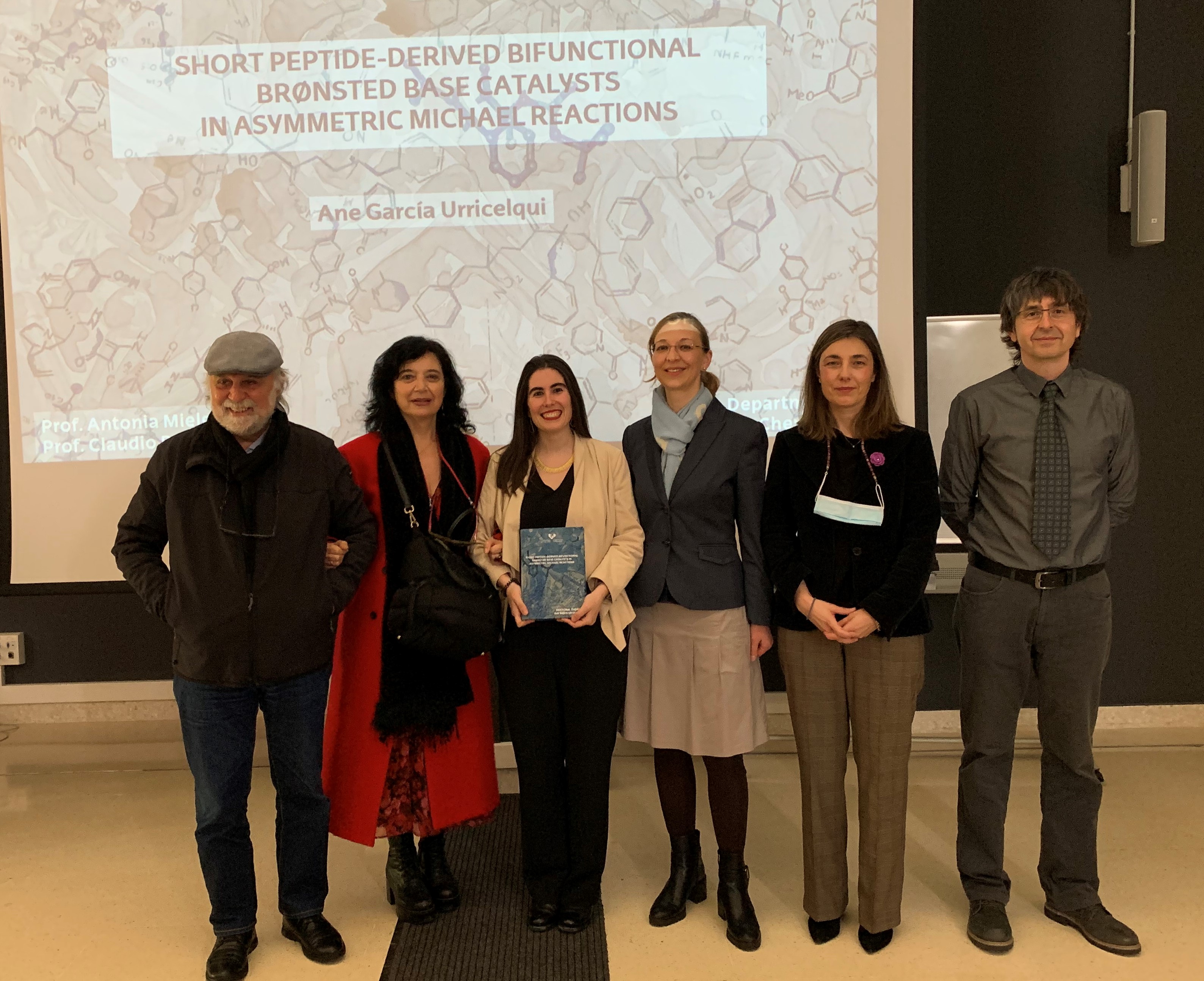
Maru has travelled to San Sebastian for being part of a Thesis Committee

Last Friday, Maru joined the evaluation committee of Ane García’s Dissertation at the University of the Basque Country (UPV), together with the other two members of the jury, Dr. Svetlana Tsogoeva (University of Erlangen-Nuremberg, Germany) and Dr. Raúl San Martín (UPV, Bilbao).

The Thesis has been supervised by Dr. Claudio Palomo (UPV) and Dr. Antonia Mielgo (UPV), and focuses on the advances made in the research and application of a type of organocatalysts widely studied within the Asymmetric Catalysis and Chemical Synthesis Research Group where the doctoral student has completed her PhD studies: bifunctional Brønsted base catalysts derived from amino acids. Proof of the relevance and importance of these results is that they have been translated into scientific publications in high-level international journals (CEJ 2021, 2483 and EJOC 2021, 3604).

Congratulations to Ane and their supervisors, and of course, all the best for her in the future!

Thanks Claudio and Antonia for the invitation! It made me particularly happy because I did my Doctoral Thesis on the synthesis of beta-lactams and Palomo was a referent on this subject in the international scientific scenario, so he was one of the first scientists I had the honor of meeting.

A pleasure to be in San Sebastian with all of you, surrounded by nice people, nice science, nice food and many laughs and nice memories!

Posted in Doctorate, Eugenia Marqués-López, Organocatalysis, PhD thesis | Tagged , , , , , , , , , , | Leave a comment

What do you know about the latest Nobel Prize in Chemistry? José and Raquel know a lot!

Few days ago, we had the pleasure of having the visit of an excellent scientist and better person, our good friend José Alemán (UAM).

Territorial section for Aragon of the RSEQ invited him to the annually organized Debate on the Nobel Prize in Chemistry. This time to talk about the one awarded in 2021 to List and MacMillan for their contributions to the development to the “Enantioselective Organocatalysis”.

Raquel was in charge of interviewing the guest in a pleasant and fun environment. We all really enjoyed the stories and anecdotes that both told us. Thanks José for coming to Zaragoza! You are always welcome!

Posted in Guest, Organocatalysis, Raquel P. Herrera, Scientific dissemination | Tagged , , , , , , , | Leave a comment

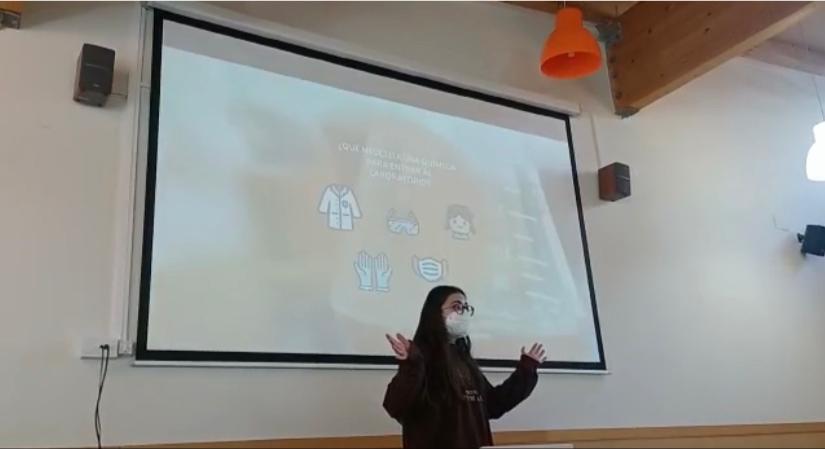
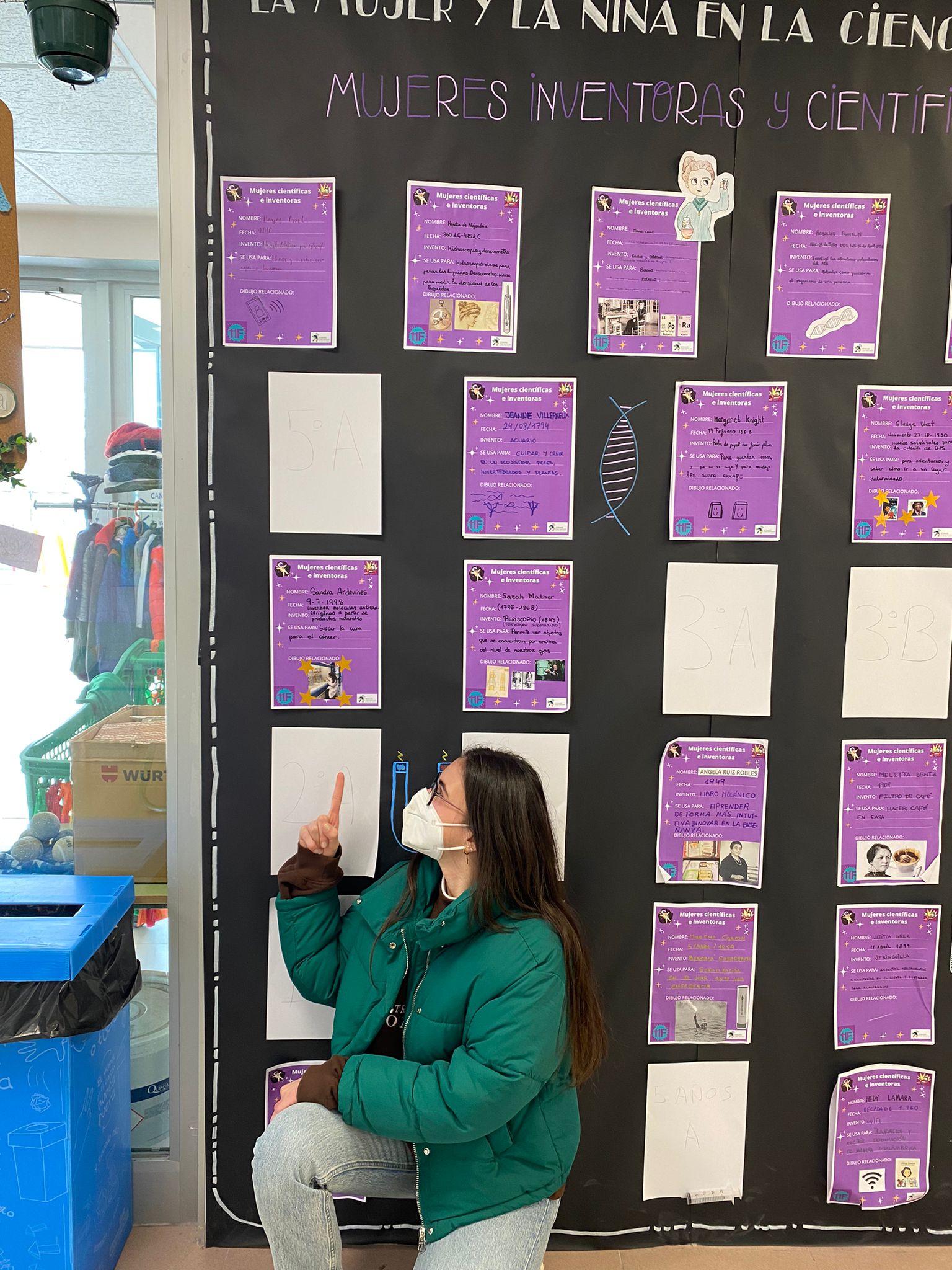
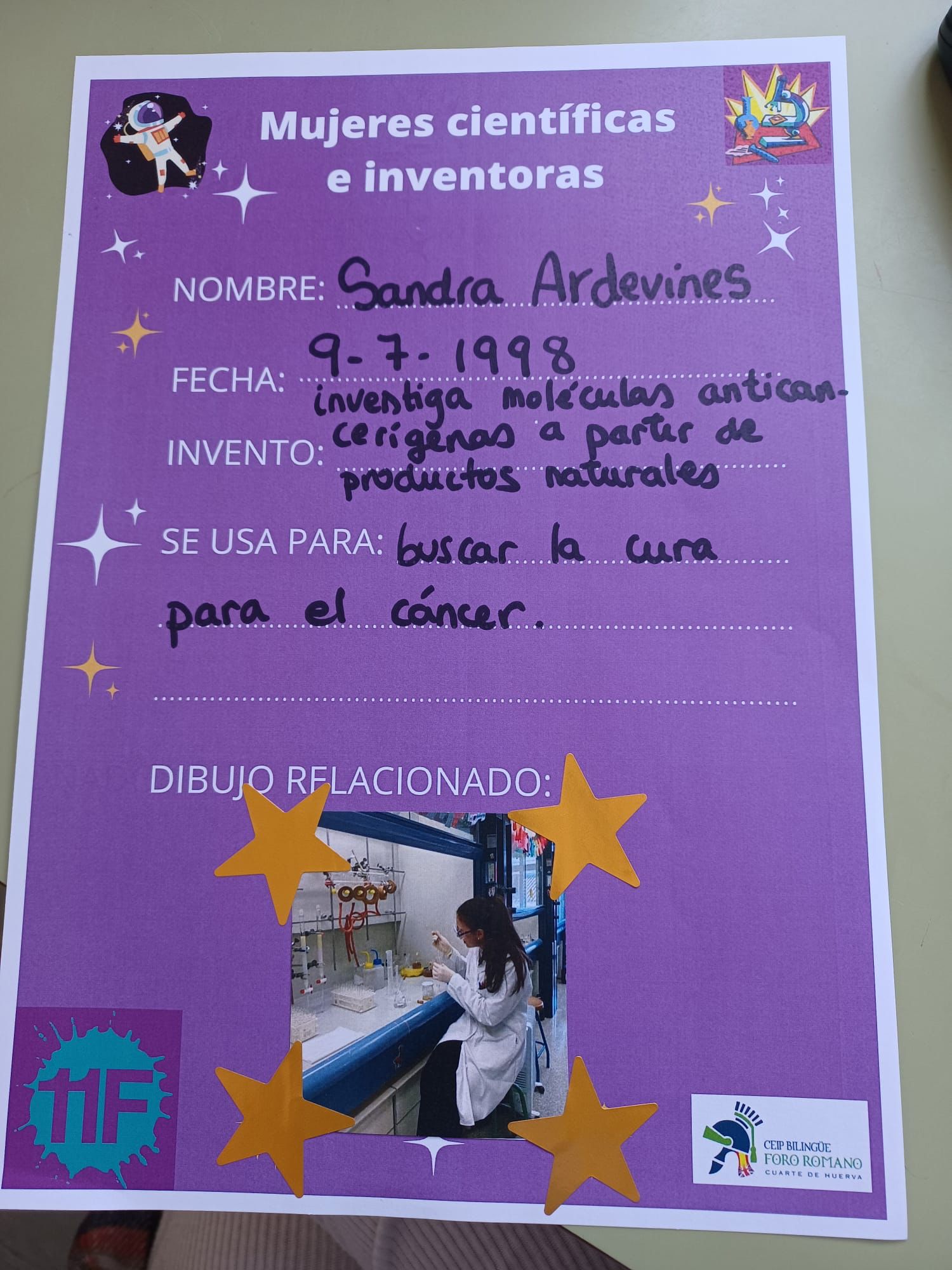
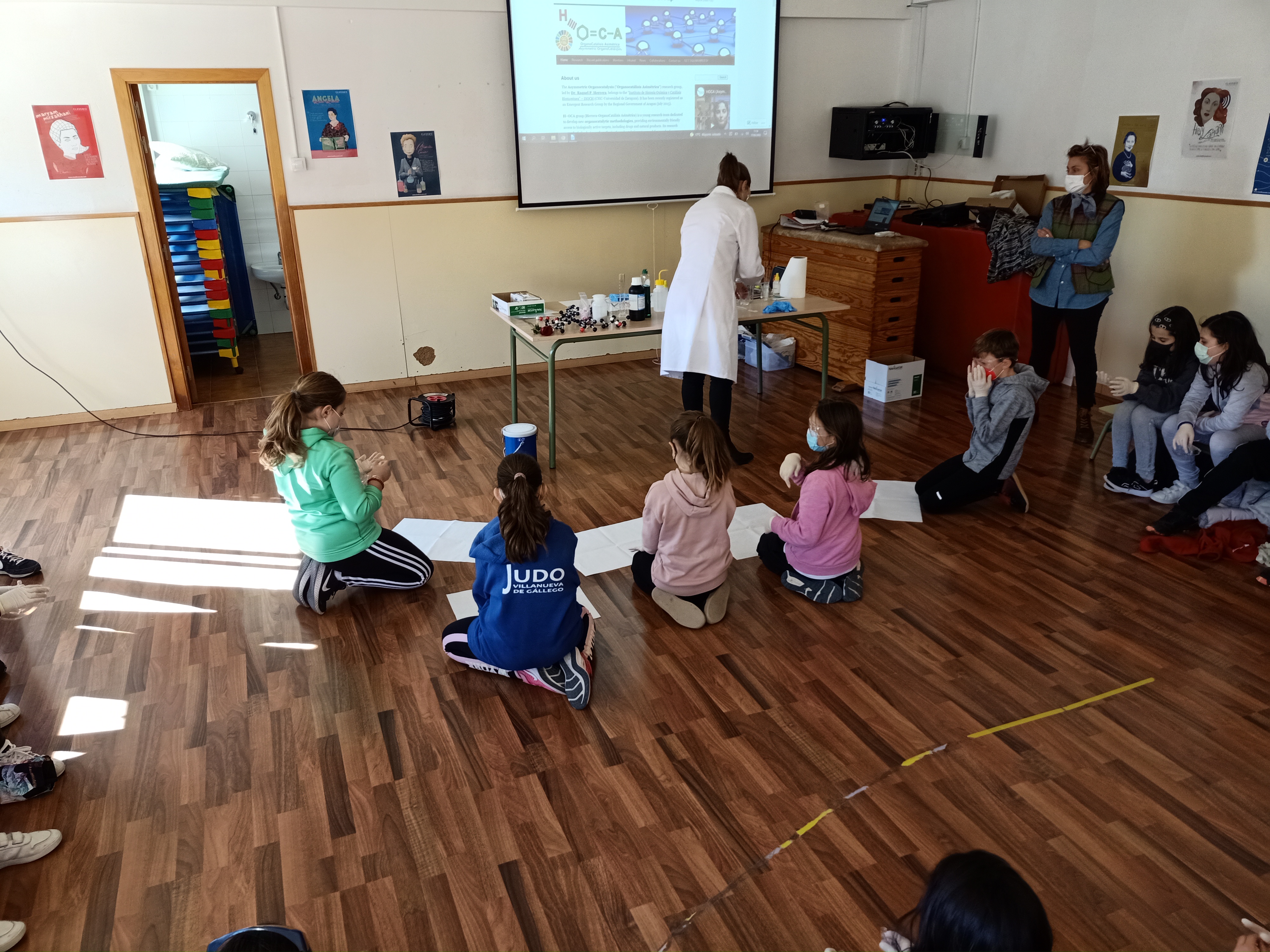
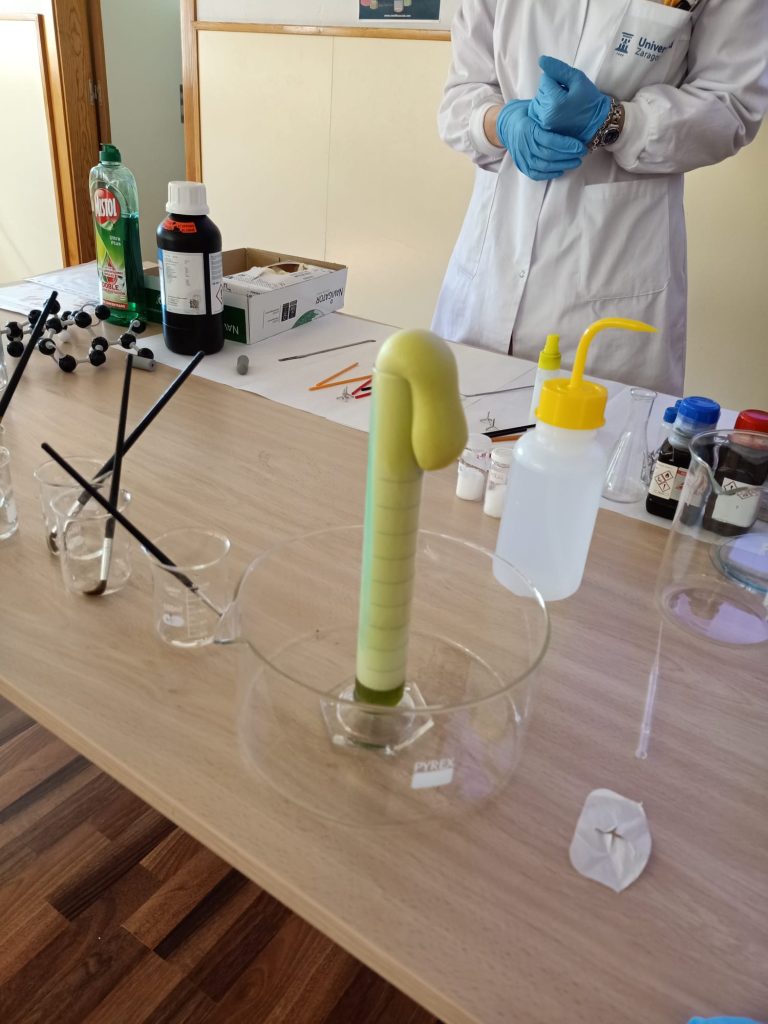
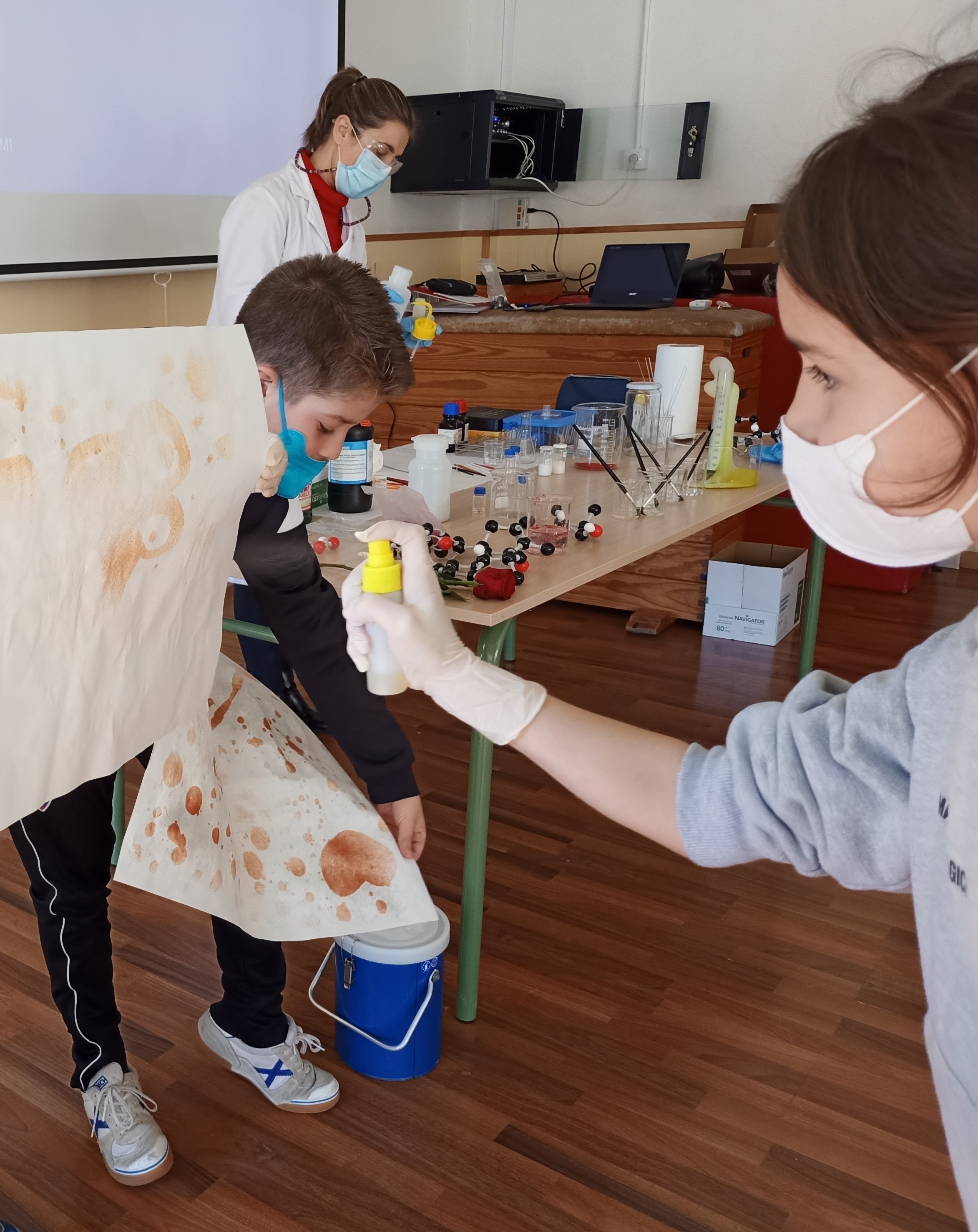
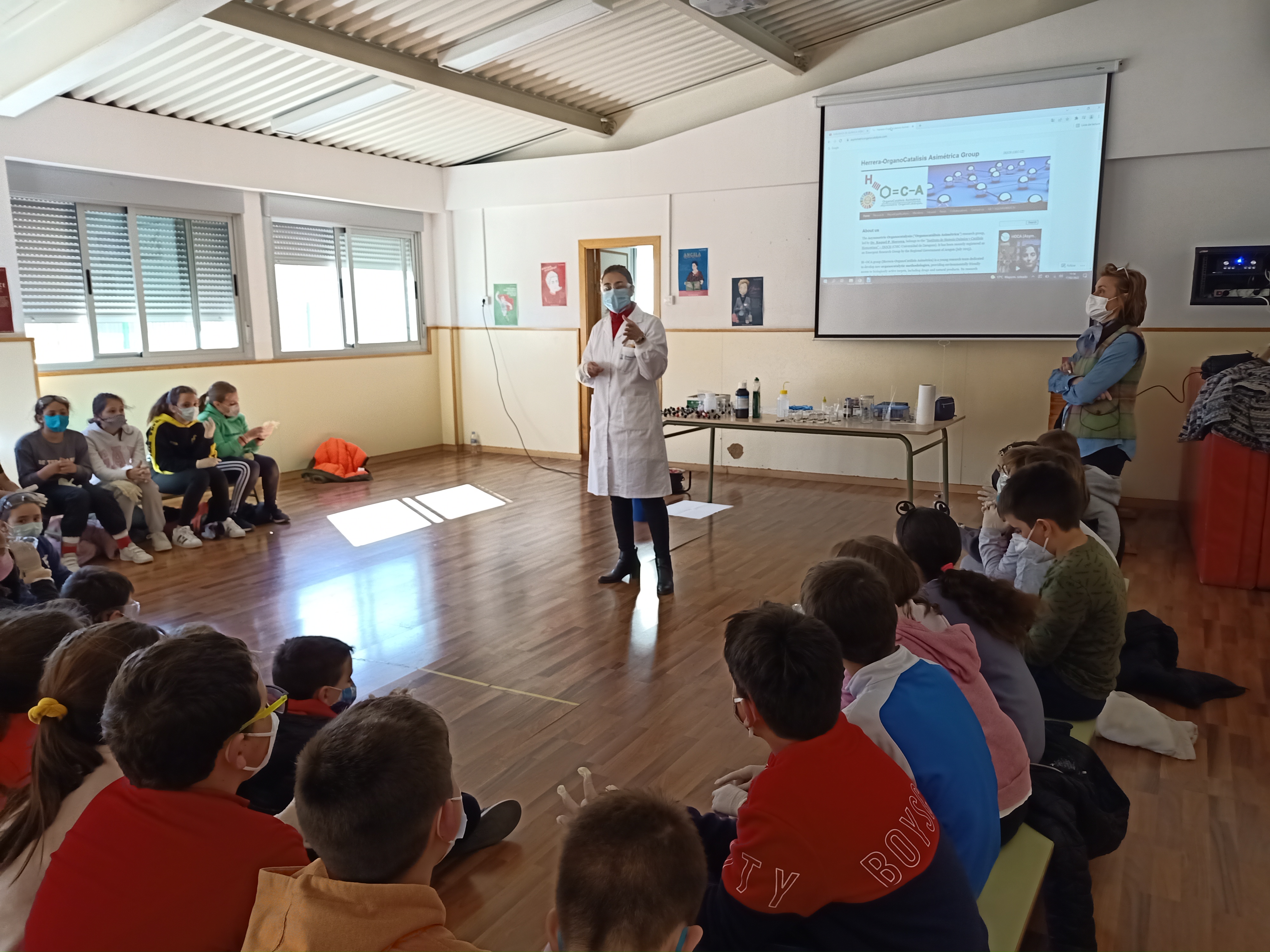
Sandra and Maru visited schools on the occasion of the United Nations Day of Women and Girls in Science

Sandra and Maru were playing with children in the CEIP Bilingüe Foro Romano (Cuarte de Huerva) and Maru in the CEIP Pintor Pradilla (Villanueva de Gállego), respectively. Everybody enjoyed a lot!!

Posted in Scientific dissemination | Tagged , , , , , , , | Leave a comment

Scientists from ISQCH had breakfast with few High schools last week

Last February 16th, the scientists from ISQCH Elena Cerrada, Eugenia Marqués-López, Raquel Lumbreras, Fernando Lahoz and José María Fraile participated in the Global Women Breakfast (IUPAC) conducted by Beatriz Latre. This is an event that happens each year in conjunction with the United Nations Day of Women and Girls in Science. The aim is to celebrate the accomplishments of Women in Science and to inspire younger generations to pursue STEM careers.
More than 50 teenagers came to the Faculty of Science and many others from different cities of Spain attended the session online. We hope they enjoyed as much as we did sharing with them our personal experiences throughout our careers. We tried to transmit them our passion and enthusiasm for Science and Chemistry.
Beatriz, thank you for inviting me. It has been a pleasure and an honor for me!

Desayuno con científicas – ISQCH -2022

Posted in Scientific dissemination | Tagged , , , , , | Leave a comment

First Sandra’s paper! Congratulations!

Horizons in Asymmetric Organocatalysis: En Route to the Sustainability and New Applications, Ardevines, S.; Marqués-López, E.; Herrera, R. P. Catalyst 2022, 12(1), 101. https://doi.org/10.3390/catal12010101. Special Issue “Organocatalysis:
Advances, Opportunity, and Challenges

Abstract. Nowadays, the development of new enantioselective processes is highly relevant in chemistry due to the relevance of chiral compounds in biomedicine (mainly drugs) and in other fields, such as agrochemistry, animal feed, and flavorings. Among them, organocatalytic methods have become an efficient and sustainable alternative since List and MacMillan pioneering contributions were published in 2000. These works established the term asymmetric organocatalysis to label this area of research, which has grown exponentially over the last two decades. Since then, the scientific community has attended to the discovery of a plethora of organic reactions and transformations carried out with excellent results in terms of both reactivity and enantioselectivity. Looking back to earlier times, we can find in the literature a few examples where small organic molecules and some natural products could act as effective catalysts. However, with the birth of this type of catalysis, new chemical architectures based on amines, thioureas, squaramides, cinchona alkaloids, quaternary ammonium salts, carbenes, guanidines and phosphoric acids, among many others, have been developed. These organocatalysts have provided a broad range of activation modes that allow privileged interactions between catalysts and substrates for the preparation of compounds with high added value in an enantioselective way. Here, we briefly cover the history of this chemistry, from our point of view, including our beginnings, how the field has evolved during these years of research, and the road ahead.

Key words. chiralityenantioselectivegreen chemistryorganocatalysissustainability

Posted in Publication | Tagged , , , , , , , , , | Leave a comment

A new collaboration with our good friend Luca Bernardi (Bologna) has just come out!

CONGRATULATIONS!!

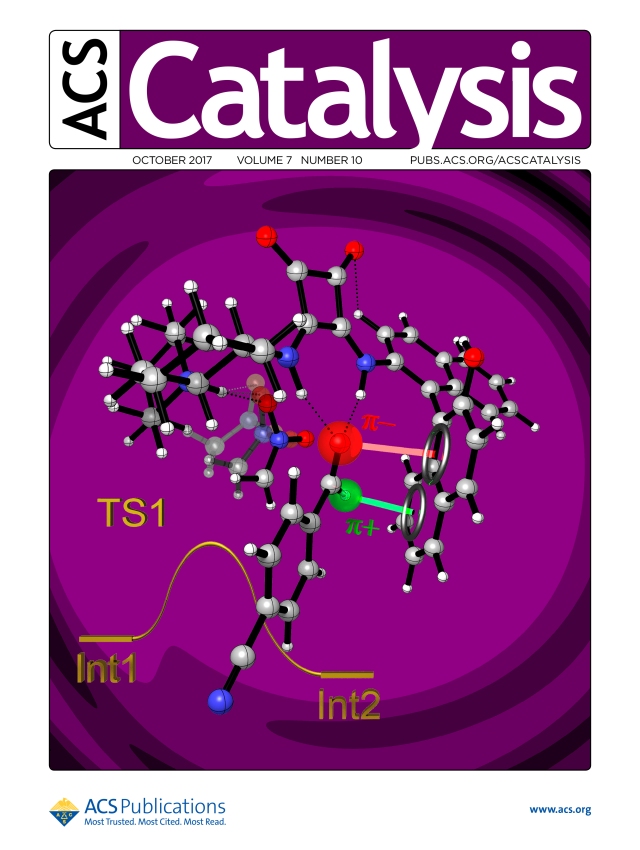
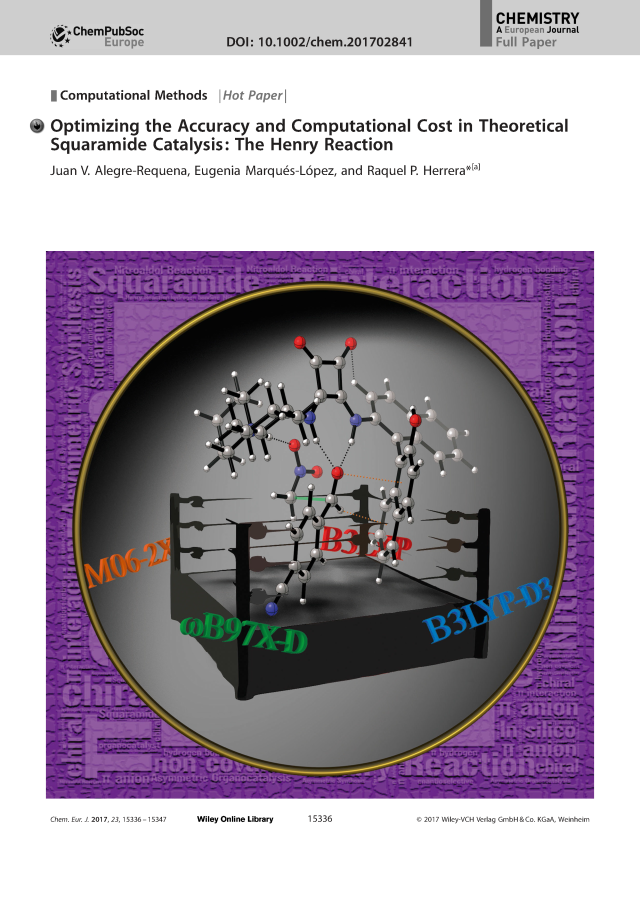
Investigation of Squaramide Catalysts in the Aldol Reaction En Route to Funapide, Canudo-Sonsona, I. G.; Vicenzi, A.; Guidotti, M.; Bisag, G. D..; Fochi, M.; Herrera, R. P.; Bernardi, L. Eur. J. Org. Chem. 2022, e202101254. https://doi.org/10.1002/ejoc.202101254.

Abstract. Funapide is a 3,3’-spirocyclic oxindole with promising analgesic activity. A reported pilot-plant scale synthesis of this chiral compound involves an asymmetric aldol reaction, catalyzed by a common bifunctional thiourea structure. In this work, we show that the swapping of the thiourea unit of the catalyst for a tailored squaramide group provides an equally active, but rewardingly more selective, catalyst for this aldol reaction (from 70.5 to 85 % ee). The reaction was studied first on a model oxindole compound. Then, the set of optimal conditions was applied to the target funapide intermediate. The applicability of these conditions seems limited to oxindoles bearing the 3-substituent of funapide. Exemplifying the characteristics of target-focused methodological development, this study highlights how a wide-range screening of catalysts and reaction conditions can provide non-negligible improvements in an industrially viable asymmetric transformation.
Keywords: Aldol reaction · Asymmetric catalysis · Funapide · Organocatalysis · Squaramide

Posted in Publication | Tagged , , , , , , , | Leave a comment

HOCA awarded a prize, congratulations!

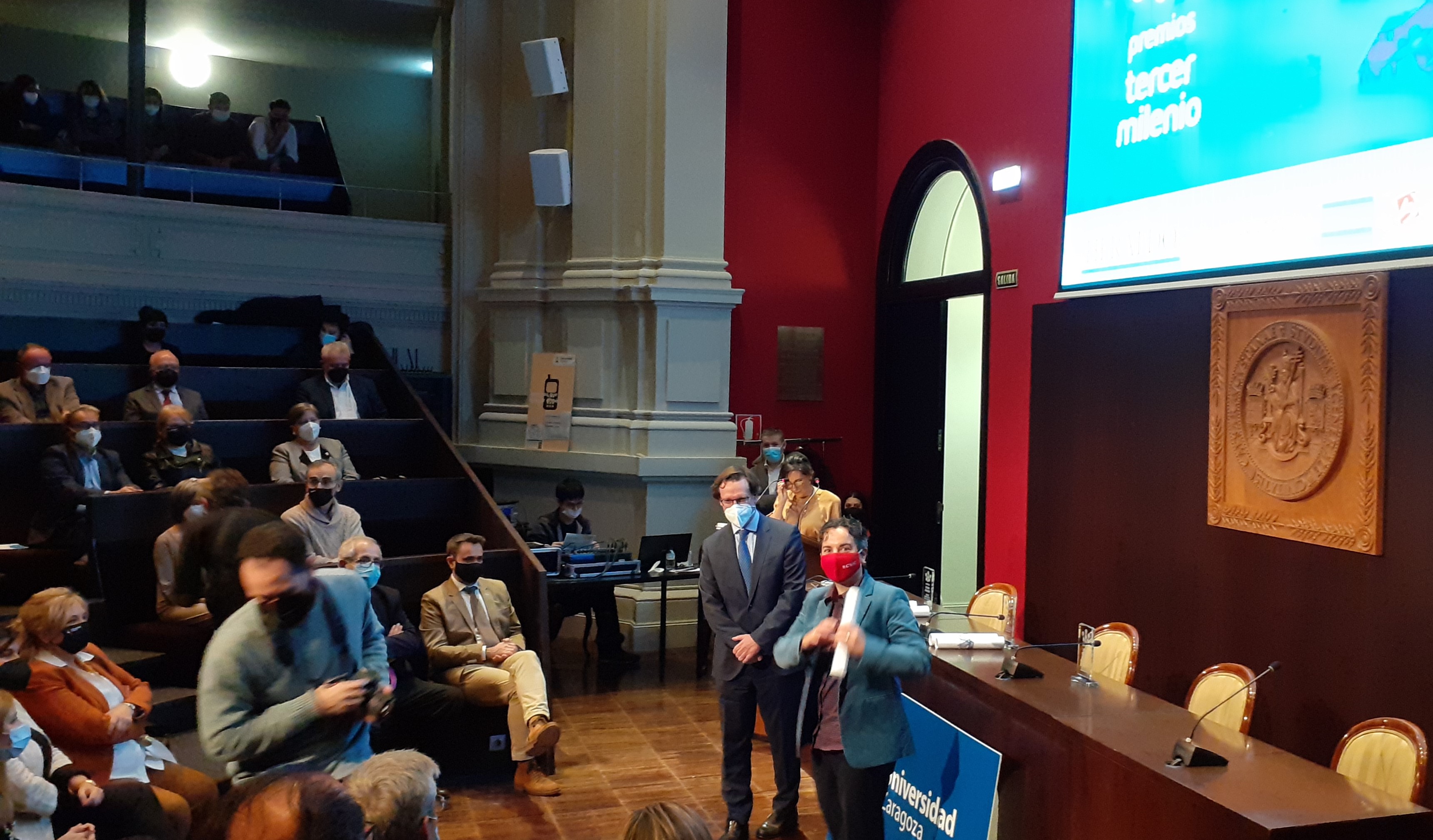
Our group has just received an accesit of Prizes “Tercer Milenio” in the category of Research and Future for our work in organoasymmetric catalysis oriented to industrial applications. Last Thursday, together with the other 14 awarded projects and careers, Raquel picked the prize up from Guillermo Ríos, head of Avanza during the ceremony celebrated in the Rectorate of the University of Zaragoza. We are very happy!!!

Posted in Award | Tagged , , , , , | Leave a comment

Congratulations Guille for the first of many scientific articles!

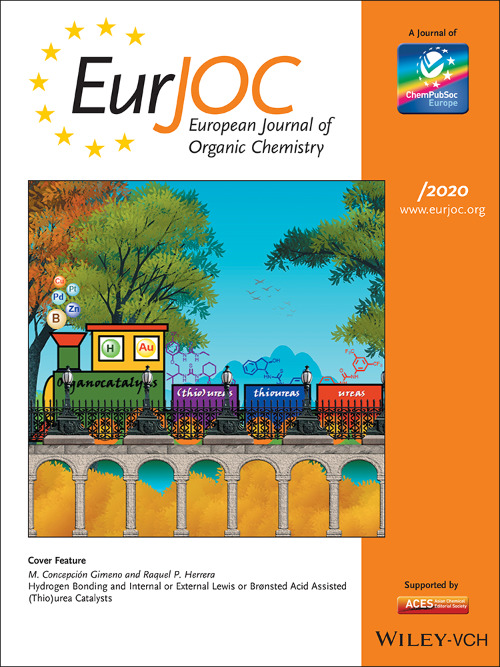
Synthesis of New Thiourea-Metal Complexes with Promising Anticancer Properties, Canudo-Barreras, G.; Ortego, L.; Izaga, A.; Marzo, I.; Herrera, R. P.; Gimeno, M. C. Molecules 2021, 26(22), 6891. https://doi.org/10.3390/molecules26226891.

Abstract. In this work, two thiourea ligands bearing a phosphine group in one arm and in the other a phenyl group (T2) or 3,5-di-CF3 substituted phenyl ring (T1) have been prepared and their coordination to Au and Ag has been studied. A different behavior is observed for gold complexes, a linear geometry with coordination only to the phosphorus atom or an equilibrium between the linear and three-coordinated species is present, whereas for silver complexes the coordination of the ligand as P^S chelate is found. The thiourea ligands and their complexes were explored against different cancer cell lines (HeLa, A549, and Jurkat). The thiourea ligands do not exhibit relevant cytotoxicity in the tested cell lines and the coordination of a metal triggers excellent cytotoxic values in all cases. In general, data showed that gold complexes are more cytotoxic than the silver compounds with T1, in particular the complexes [AuT1(PPh3)]OTf, the bis(thiourea) [Au(T1)2]OTf and the gold-thiolate species [Au(SR)T1]. In contrast, with T2 better results are obtained with silver species [AgT1(PPh3)]OTf and the [Ag(T1)2]OTf. The role played by the ancillary ligand bound to the metal is important since it strongly affects the cytotoxic activity, being the bis(thiourea) complex the most active species. This study demonstrates that metal complexes derived from thiourea can be biologically active and these compounds are promising leads for further development as potential anticancer agents. 

Keywordsbiological properties; cancer; cytotoxicity; gold; metal complexes; silver; thiourea

Posted in Publication, Research | Tagged , , , , , | Leave a comment