Happy birthday, Maru!

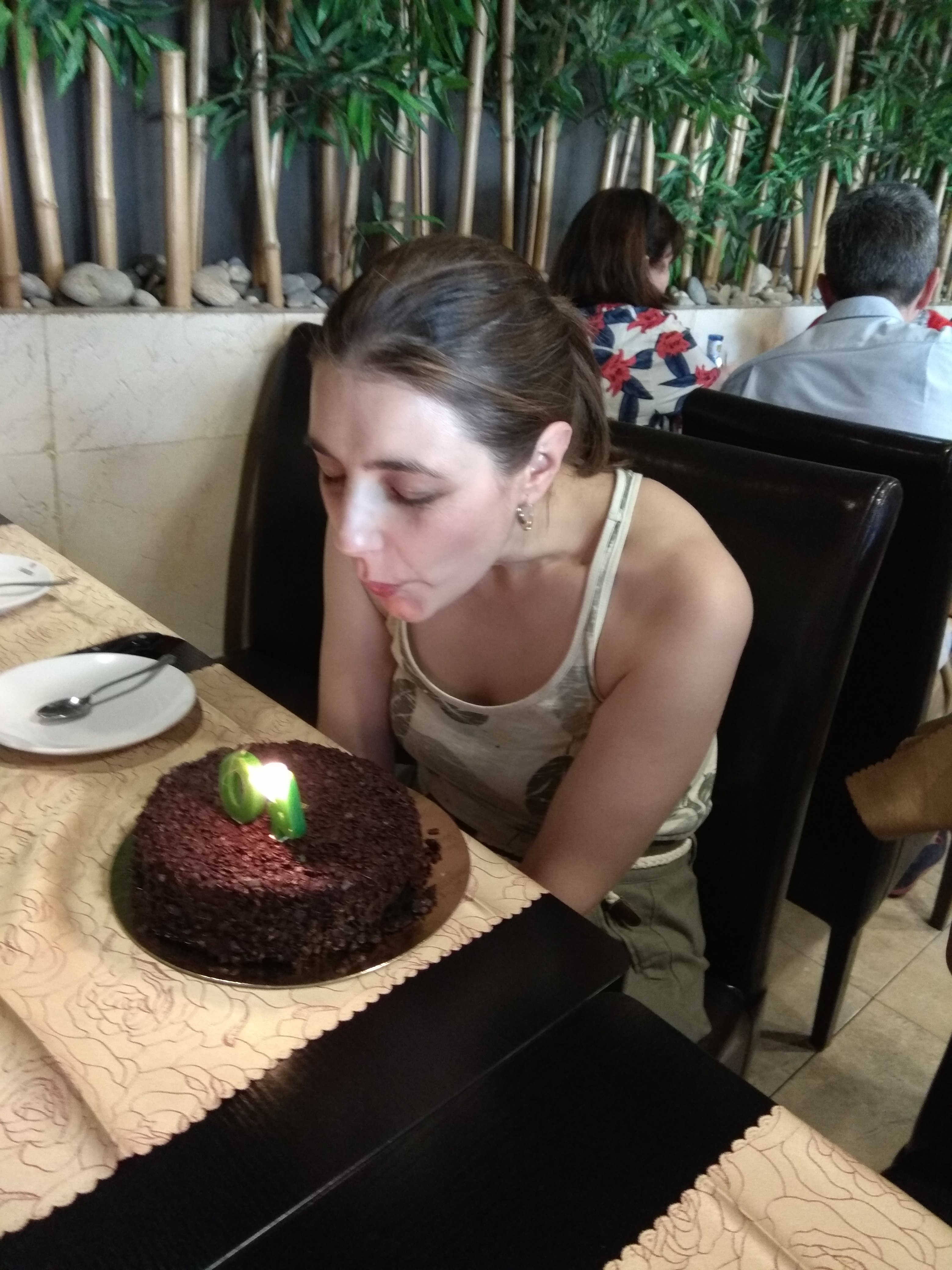
THANKS GUYS!
Happy birthday, Maru!
THANKS GUYS!
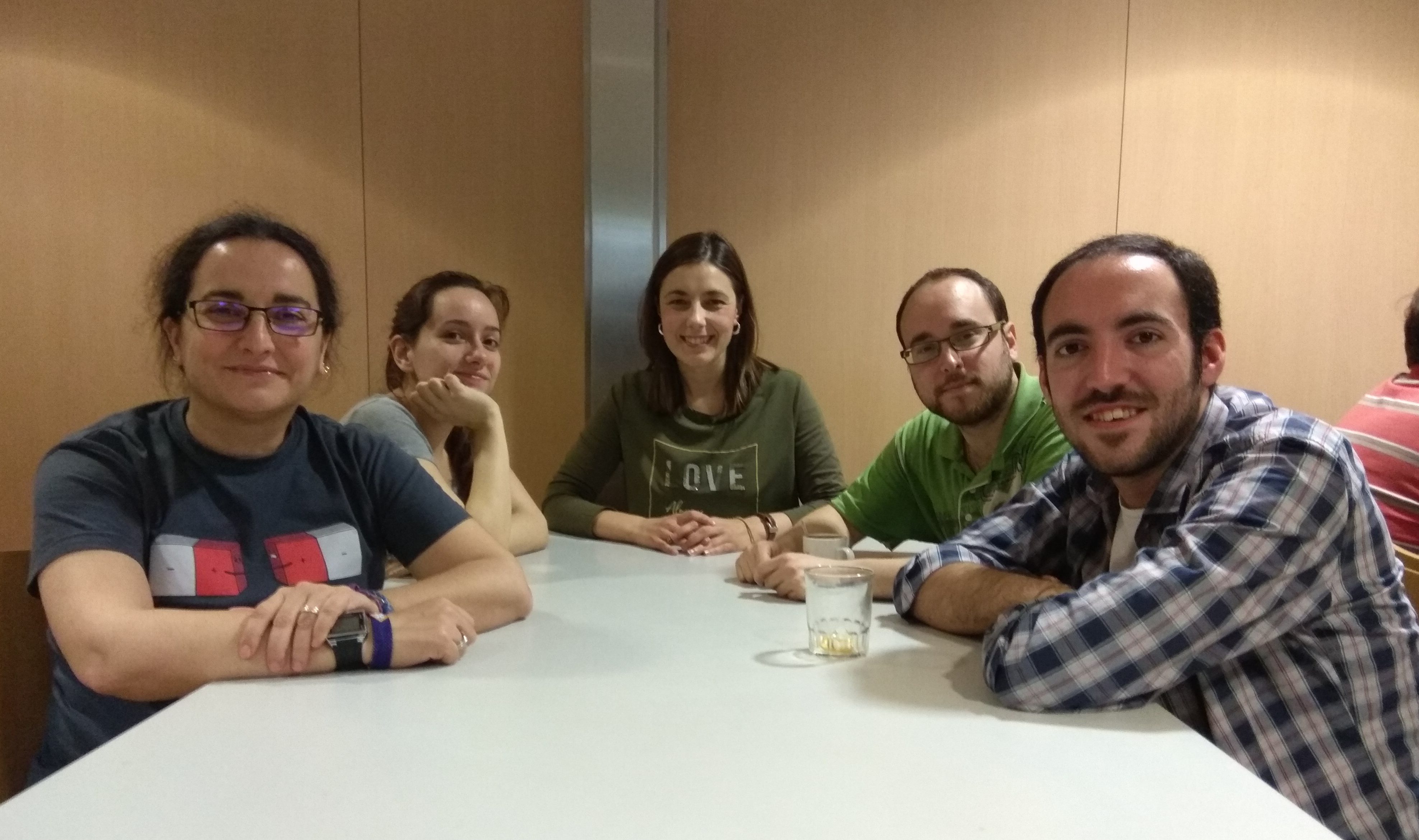
Raquel belongs to the organizing committee of the XXXVI CONGRESS OF THE ORGANOMETALLIC CHEMISTRY GROUP (GEQO), 5th to 7th September 2018 in Zaragoza (Spain).

Happy birthday 😉
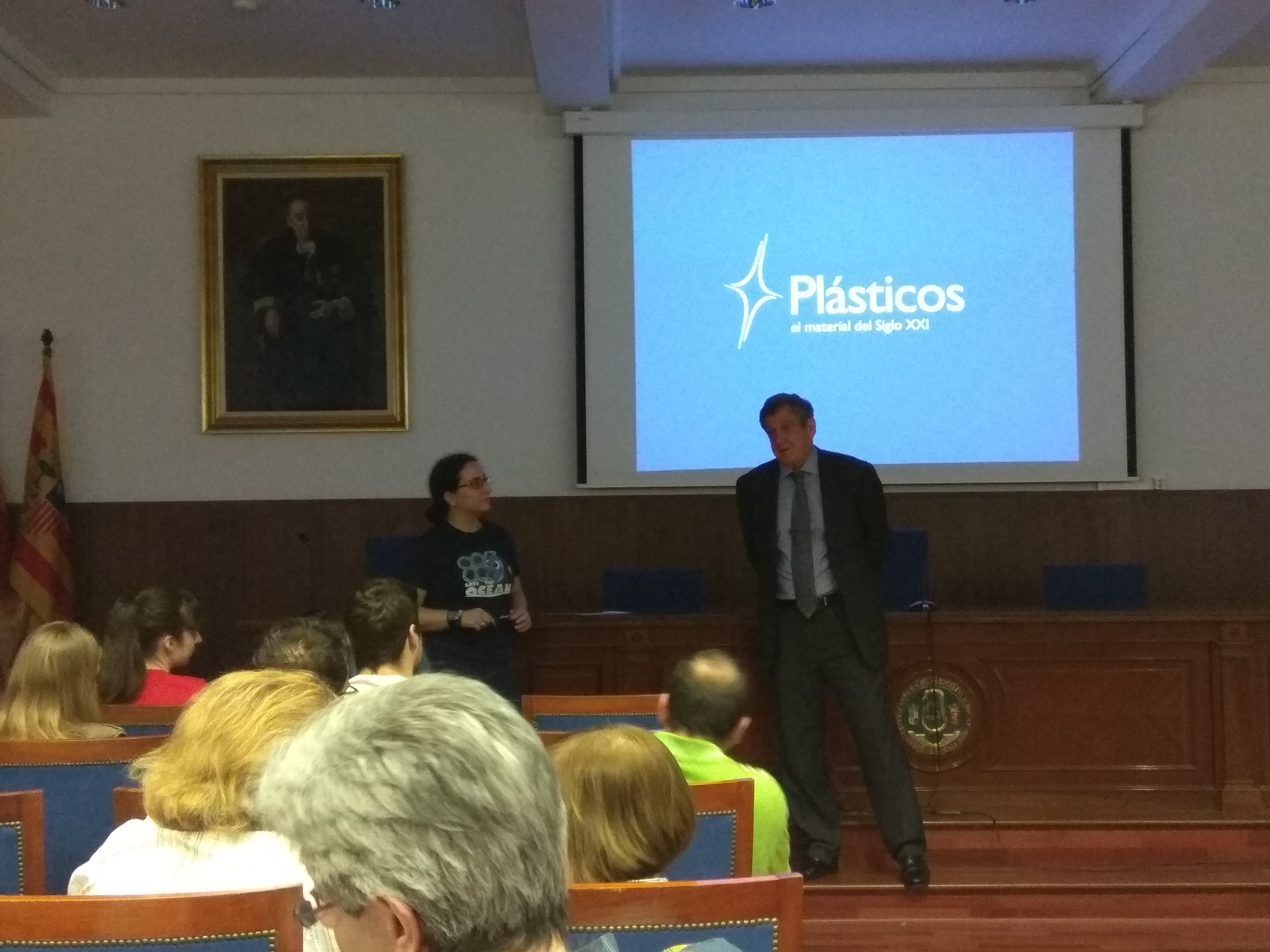
Last May 29th, Ignacio Marco from PlasticsEurope, visited us and gave a conference about “Plastics and Sustainability” in the context of the course “Sustainable Chemistry and Catalysis“.
Hydrothermal synthesis of CoII chiral inorganic-organic complex: Structural, thermal and catalytic evaluation, Maatar Ben Salah, A.; Herrera, R. P.; Naïli, H. J. Mol. Struct. 2018, https://doi.org/10.1016/j.molstruc.2018.04.002
Abstract. By heating the cobalt chloride hexahydrate (CoCl2·6H2O) with the R form of the organic amine α-methylbenzylamine (C8H11N) under hydro(solvo)thermal conditions, we have successfully generated the corresponding non-centrosymmetric homochiral hybrid tris(α-methylbenzylammonium tetrachloridocobaltate chloride [R-(C8H12N)3][CoCl4]Cl abbreviated R(MBA)Co. We present the growth conditions together with a characterization of the single crystals by means of X-ray single-crystal diffraction, Fourier-transform infrared, TG/TDA thermal decomposition and catalytic properties. This inorganic–organic hybrid compound crystallizes in the chiral space group P21 and exhibits a supramolecular-layered organization wherein a double layer of (R)-methylbenzylammonium cations and the uncoordinated chloride anions are sandwiched between anionic layers, formed by isolated tetrachloridocobaltate tetrahedra. The crystal packing is governed by a three-dimensional network of N/C—H···Cl hydrogen bonds between the inorganic and organic moieties and C-H···π interactions between the aromatic rings of the organic moieties themselves. Thermal analysis discloses a phase transition at the temperature 130 °C. The Co complex was also employed as suitable catalyst activating the acetal formation reaction of aldehydes using MeOH as solvent and as the unique source of acetalisation.
Keywords. Chiral; non-centrosymmetric; hybrid; hydrogen bonds; phase transition; catalytic properties
Synthesis, structural determination and antimicrobial evaluation of two novel CoII and ZnII halogenometallates as efficient catalysts for the acetalization reaction of aldehydes, Maatar Ben Salah, A.; Belghith Fendri, L.; Bataille, T.; Herrera, R. P.; Naïli, H. Chem. Cent. J. 2018, https://doi.org/10.1186/s13065-018-0393-6
Abstract
Background: Complexes of imidazole derivatives with transition metal ions have attracted much attention because of their biological and pharmacological activities, such as antimicrobial, antifungal, antiallergic, antitumoural and antimetastatic properties. In addition, imidazoles occupy an important place owing to their meaningful catalytic activity in several processes, such as in hydroamination, hydrosilylation, Heck reaction and Henry reaction. In this work, we describe the crystallization of two halogenometallate based on 2-methylimidazole. Their IR, thermal analysis, catalytic properties and antibacterial activities have also been investigated.
Results: Two new isostructural organic-inorganic hybrid materials, based on 2-methyl-1H-imidazole, 1 and 2, were synthesized and fully structurally characterized. The analysis of their crystal packing reveals non-covalent interactions, including C/N–H···Cl hydrogen bonds and π···π stacking interactions, to be the main factor governing the supramolecular assembly of the crystalline complexes. The thermal decomposition of the complexes is a mono-stage process, confrmed by the three-dimensional representation of the powder difraction patterns (TDXD). The catalytic structure exhibited promising activity using MeOH as solvent and as the unique source of acetalization. Moreover, the antimicrobial
results suggested that metal-complexes exhibit signifcant antimicrobial activity.
Conclusion: This study highlights again the structural and the biological diversities within the feld of inorganic–organic hybrids.
Keywords: Halogenometallate, X-ray difraction, Thermal analysis, Antibacterial activities, Hydrogen bonds, Supramolecular architecture, Catalysis
A new article has just been published. Thank you to everyone, and congratulations!
Functionalization of π-activated alcohols by trapping carbocations in pure water under smooth conditions, Ortiz, R.; Koukouras, A.; Marqués-López, E.; Herrera, R. P. Arab. J. Chem. 2018, https://doi.org/10.1016/j.arabjc.2018.01.022
Abstract. Acetic acid as catalyst in pure water was found to be an excellent reaction medium for the direct dehydrative functionalization of π-activated alcohols using a wide variety of interesting C-, P-, and S-centered nucleophiles, such as indoles, pyrrole, anilines, 1,3-dicarbonyl compounds, diphenyl phosphite and pyridine-2-thiol. The smooth reaction conditions, along with high yields, short reaction times, clean reaction crudes, an easy product isolation procedure, plus the reusability of the catalyst and the use of no excess of nucleophiles, make this approach an atom economical, green and appealing method to efficiently trap carbocations in pure water, leading to new Csp3–X bonds (X = Csp2, Csp3, P and S).
Keywords. π-activated alcohols; Brønsted acid; carbocation; dehydrative substitution; water
“Functionalization of π-activated alcohols by trapping carbocations in pure water under smooth conditions”, R. Ortiz, A. Koukouras, E. Marqués-López, R. P. Herrera, Arab. J. Chem. 2018, accepted.
Abstract: Acetic acid as catalyst in pure water was found to be an excellent reaction medium for the direct dehydrative functionalization of π-activated alcohols using a wide variety of interesting C-, P-, and S-centered nucleophiles, such as indoles, pyrrole, anilines, 1,3-dicarbonyl compounds, diphenyl phosphite and pyridine-2-thiol. The smooth reaction conditions, along with high yields, short reaction times, clean reaction crudes, an easy product isolation procedure, plus the reusability of the catalyst and the use of no excess of nucleophiles, make this approach an atom economical, green and appealing method to efficiently trap carbocations in pure water, leading to new Csp3–X bonds (X = Csp2, Csp3, P and S).
Keywords: π-activated alcohols; Brønsted acid; carbocation; dehydrative substitution; water.













 Herrera-OrganoCatalisis Asimétrica Group