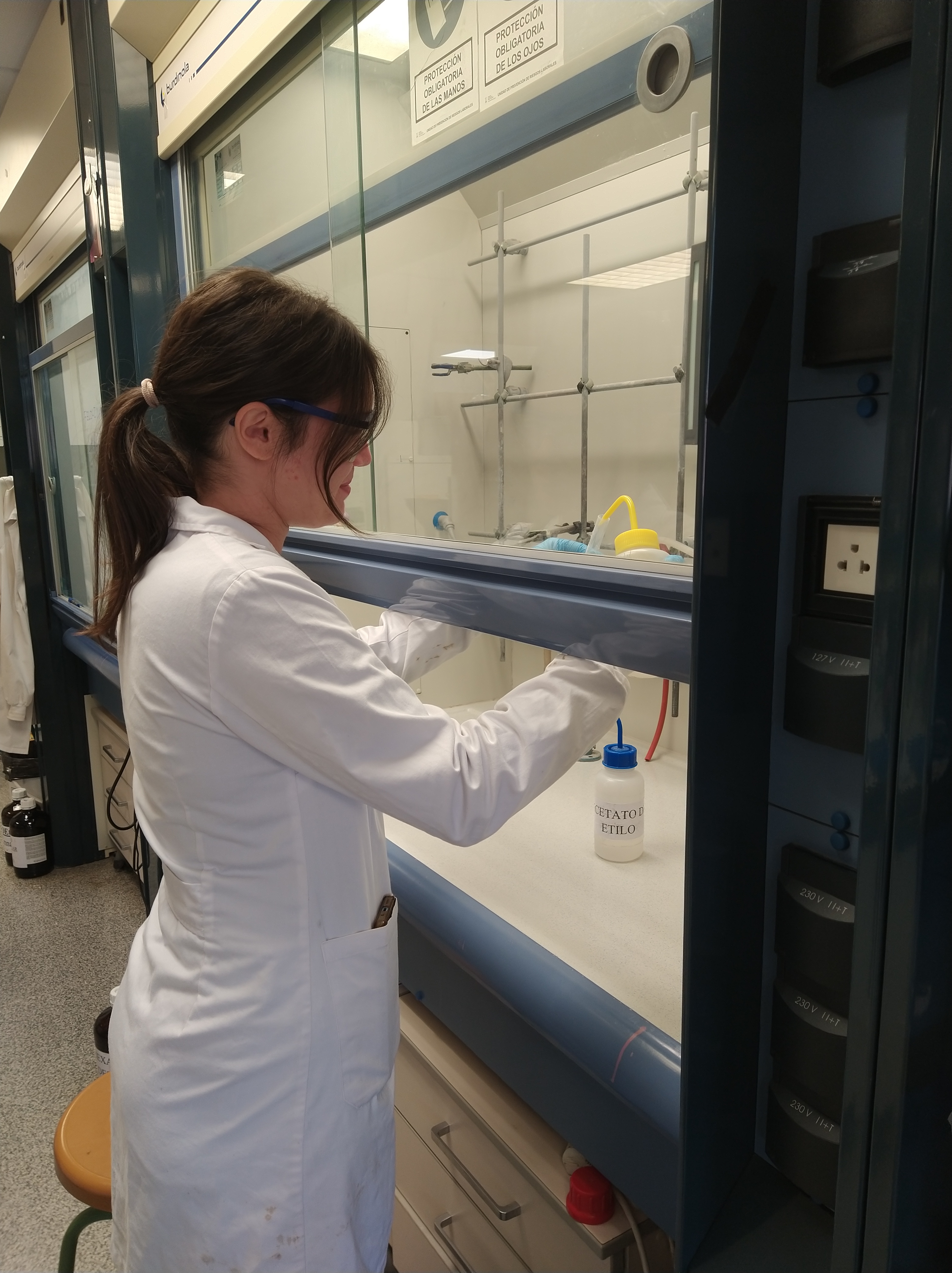
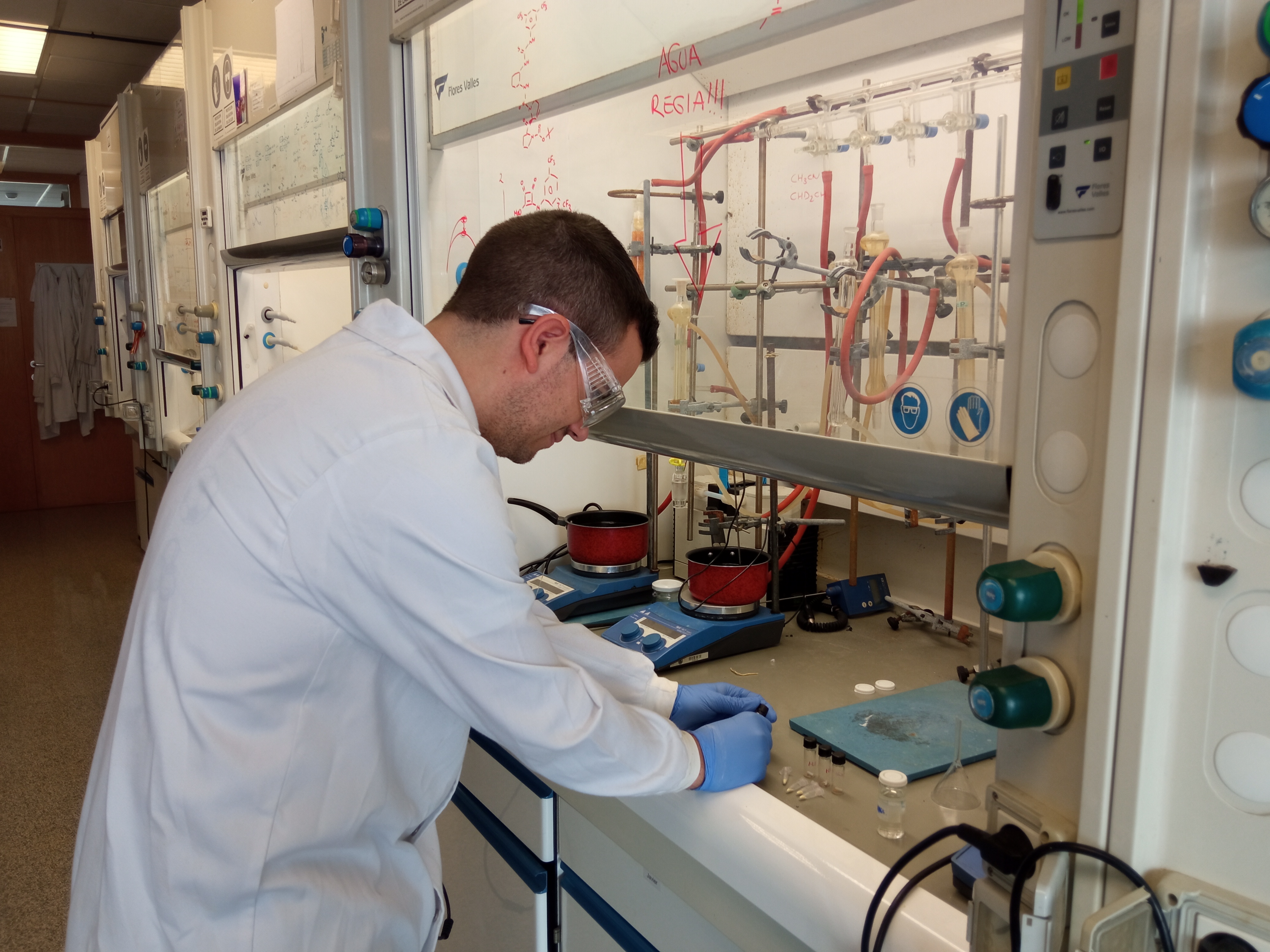
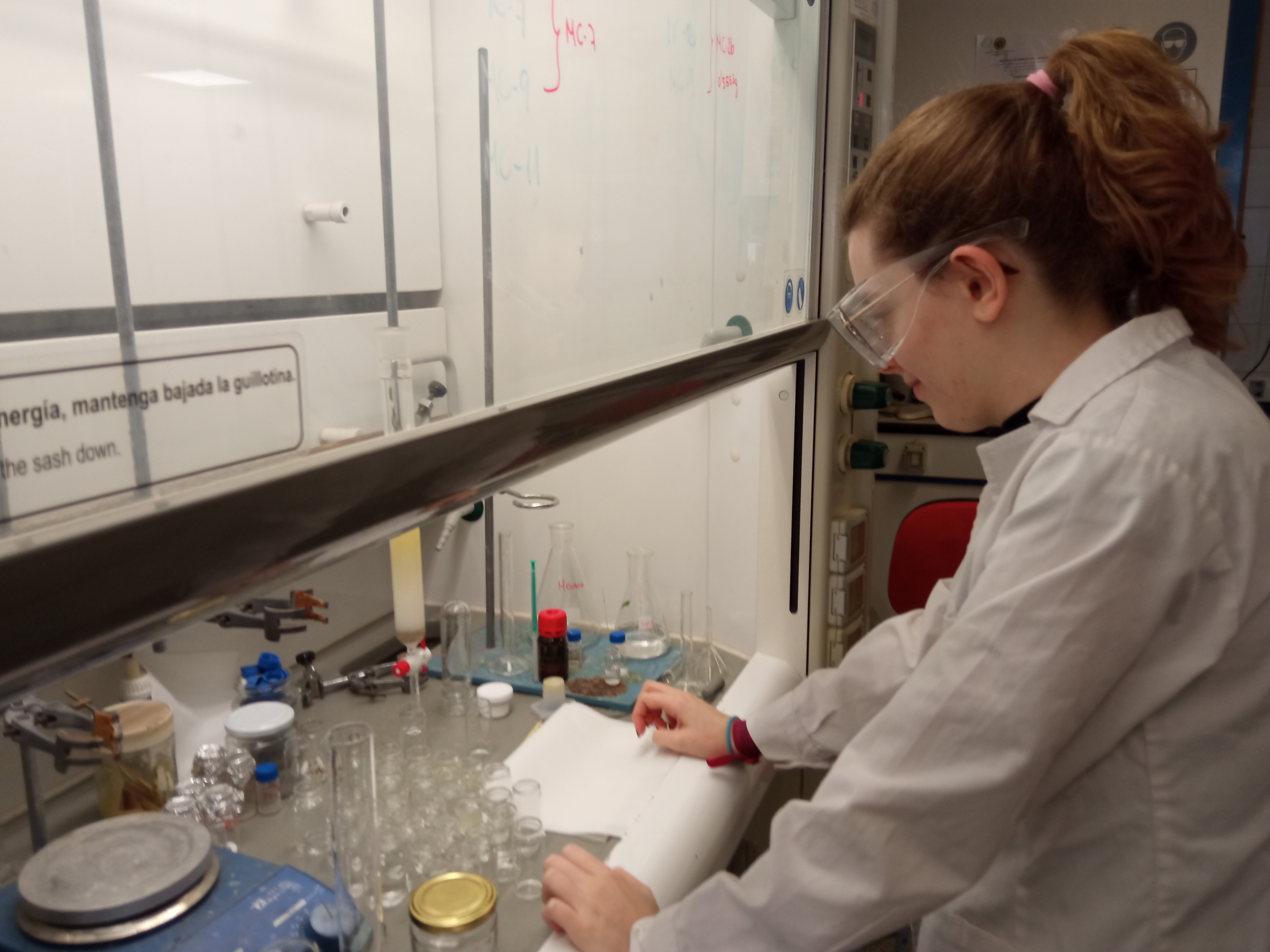
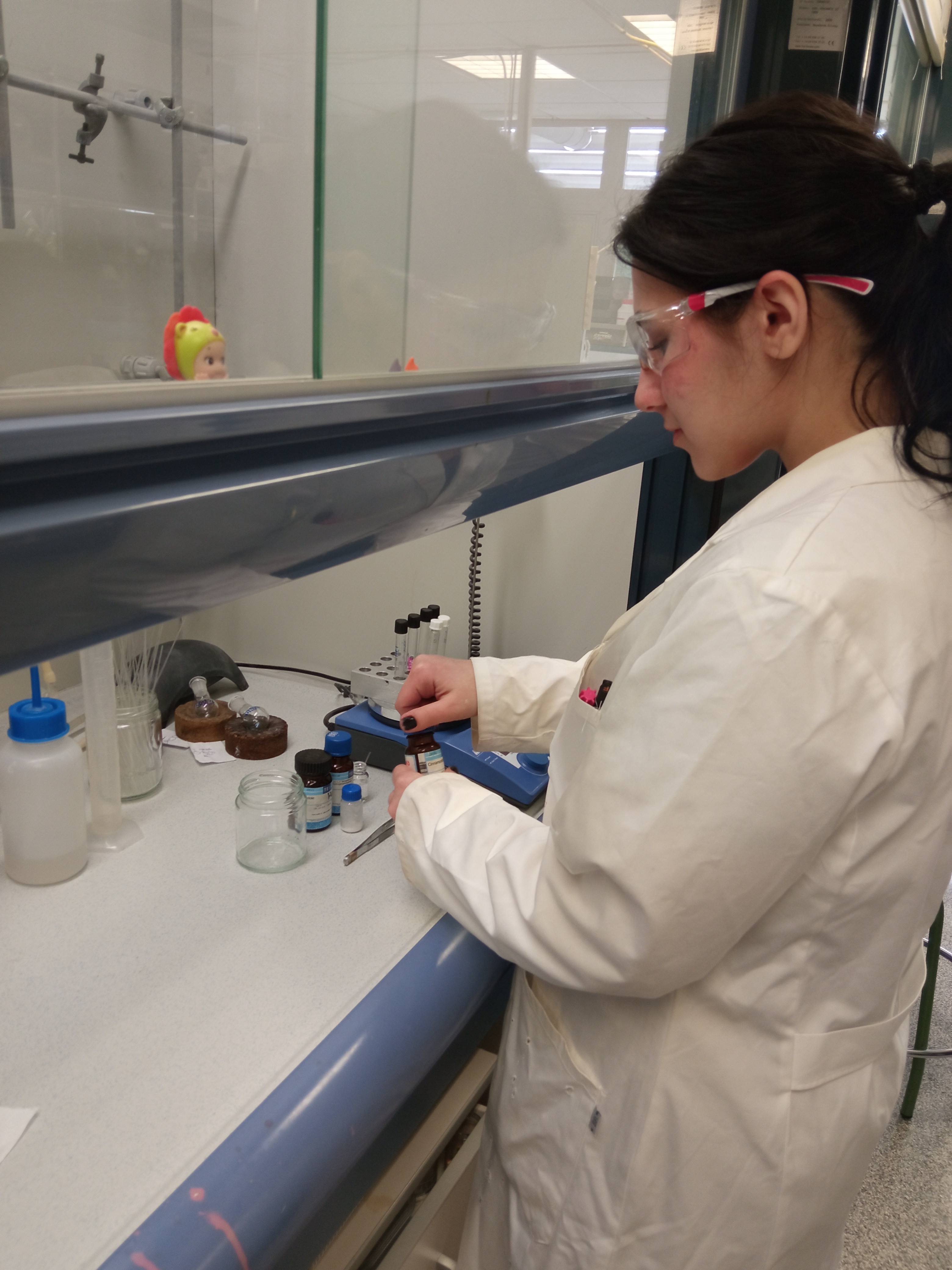
Prood to be part of this great project with colleagues and friends: The new Organocatalysis book

Congratulations!

Ardevines, S.; Marqués-López, E.; Herrera, R. P. Increasing Complexity: Enantioselective Multicatalyzed Multistep Reactions in Enantioselective Organocatalysis: Catalysts, Reactions, and Applications (Ed. Dalko, P.) Wiley-VCH; 2026, 1169–1200. Print ISBN:9783527353408, Online ISBN:9783527845552, DOI:10.1002/9783527845552.

Summary. This chapter presents an overview of enantioselective multicatalyzed multistep reactions as a powerful approach in modern synthetic chemistry. It focuses on the synergistic use of multiple catalysts, particularly combinations of two organocatalysts or an organocatalyst with either transition metal complexes or biocatalysts, to achieve high efficiency, selectivity, and stereocontrol in the synthesis of complex chiral architectures. Inspired by nature’s enzymatic strategies, these cascade and one-pot processes enable efficient access to structurally sophisticated molecules. Special emphasis is placed on organomulticatalysis, with detailed discussion of cooperative, relay, and sequential mechanisms. Pioneering examples illustrate the challenges and opportunities of integrating organocatalysis with biocatalysis or metal catalysis, as well as the use of distinct organocatalysts in tandem. Recent advances in asymmetric cascade reactions and one-pot methodologies are highlighted, revealing their practical relevance and contribution to enhancing molecular complexity, atom economy, and synthetic efficiency.
Posted in Publication | Tagged , , , , , , , , | Leave a comment

New collaborative study just published in ChemCatChem

Congrats, especially to Sandra and thank you to Israel and his team!

Exploring the Role of Halogen Bond Donors in the Thiourea-Catalyzed Friedel–Crafts Alkylation Reaction, Ardevines, S.; González-Pinardo, D.; Fernández, I.; Marqués-López, E.; Herrera, R. P.; Chem. Cat. Chem. 2025. DOI: 10.1002/cctc.202501060.

Abstract. Halogen bonding (XB) has recently emerged as a powerful tool in organocatalysis, though asymmetric applications remain scarce. Here we report the first synergistic system combining a chiral thiourea and an inert XB donor. The iodine derivative enhances substrate activation via LP(I)→π*(C = C) interactions. Instead, a strong π–π interaction between the catalysts rules out direct thiourea activation. Applied to asymmetric Friedel–Crafts alkylation, iodoethynyl cocatalysts boost both reactivity and enantioselectivity. DFT calculations rationalize the crucial role of the XB donor, highlighting a new strategy to exploit non-covalent interactions in asymmetric synthesis.

Posted in Publication, Research | Tagged , , , , , , , , , , , , | Leave a comment

Scientific collaboration: Synergies between enzymes and organocatalysis

Scope and synthetic applications of the aryl-alcohol oxidase from Streptomyces hiroshimensis (ShAAO), Ascaso-Alegre, C.; Cinca-Fernando, P.; Roberts, T.; López-Fernández, P.; Herrera, R. P.; Cosgrove, S.; Ferreira, P.; Mangas-Sanchez, J.; Org. Lett. 2025. DOI: 10.1021/acs.orglett.5c03814.

Abstract. The sustainable production of carbonyl compounds is of growing interest due to their broad academic and industrial interest. Herein, we explored the aryl-alcohol oxidase from Streptomyces hiroshimensis (ShAAO), mapping its activity across diverse alcohols, revealing a distinct profile from other natural AAOs. Integrated into tandem organocatalytic processes, ShAAO enabled the synthesis of various chiral compounds, including an intermediate for paroxetine. Gram-scale reactions delivered high yields and turnover numbers exceeding 65000. Immobilization further enhanced stability, highlighting ShAAO as an efficient and industrially relevant biocatalyst.

Congratulations to everyone, especially to Christian!

Posted in Publication | Tagged , , , , , , , , , , , , | Leave a comment

Nice compilation of organocatalytic tools for the functionalization of chromenes just published!

Organocatalysed C-2 and C-3 functionalisation of chromones, Morales-Solín, J. C.; Ordoñez, M.; Marqués-López, E.; Herrera, R. P.; Org. Biomol. Chem. 2025,advance article. DOI: 10.1039/D5OB01129A.

Abstract. This review highlights the recent advancements in organocatalysed Michael addition reactions involving chromones, an important class of heterocyclic compounds with significant biological and pharmacological properties. Chromones, with their versatile conjugated structure, act as both electrophilic and nucleophilic partners, providing an ideal platform to synthesise diverse stereochemically enriched molecular frameworks. The work highlights various organocatalysed examples using chiral carbenes, phosphoric acids, thioureas and squaramides, that have demonstrated high efficiency and stereocontrol in a range of reactions. Mechanistic insights into how these catalytic systems activate the chromone scaffold and promote enantioselective transformations are also discussed in detail. Finally, we underline emerging trends and future directions in this research area, addressing current limitations, such as the need for more efficient catalytic systems and broader substrate compatibility.

“Congratulations, especially to Juan Carlos!

Posted in Publication, Review | Tagged , , , , , , | Leave a comment

New publication in ChemSusChem: A great collaboration with Prof. García Mancheño!

Especially proud of Sandra for her outstanding contributions during her research stay at Universität Münster.

Three-Step One-Pot Photocatalytic Oxidation of Feedstocks and Organocatalytic Sequential Cascade to Access Enantioenriched α-Aminonitriles, Purelli, S; Ardevines, S.; Malagón, S.; Khassenova, G.; Hülße, T.; Marqués-López, E.; Herrera, R. P.; García Mancheño, O.; ChemSusChem 2025,2501255, early view. DOI: 10.1002/cssc.202501255.

Abstract. A three-step, one-pot, sequential cascade starting from simple feedstocks to increase complexity toward value-added chiral synthetic building blocks is reported. This is achieved by precisely integrating organic photocatalysis and noncovalent organocatalysis, often operating at dissimilar conditions and reaction media. In particular, this strategy is used to enable the direct transformation of readily available benzylic substrates, such as methylbenzenes, benzyl alcohols, or amines, into enantioenriched α-aminonitriles by benzylic C-H photooxidation to their corresponding aldehydes, followed by in situ imine formation and final asymmetric organocatalytic Strecker reaction. The enantioenriched α-aminonitrile products are built in moderate to good yields and moderate to high enantiomeric ratios (up to 96:4 e.r.), highlighting the effectiveness of the overall cascade process. This methodology simplifies complex synthetic pathways, enhances atom economy, and broadens the applicability of metal-free photocatalytic methodologies, offering a robust platform for constructing chiral building blocks from abundant starting materials and feedstocks.

Posted in Publication | Tagged , , , , , , , , , , , , | Leave a comment

Congratulations Roberto!

Alkynyl-Gold Carbazole Hybrids: Luminescence and Functionalization via iClick Reactions, Berbés Martínez, R; Alegre-Requena, J. V.; Herrera, R. P.; Gimeno, M. C.; Inorg. Chem. 2025,64, 17399–17408. DOI: 10.1021/acs.inorgchem.5c02714.

Abstract. A series of structurally diverse gold(I) complexes bearing the 9-(4-ethynylphenyl)-9H-carbazole chromophore were synthesized, featuring mononuclear, dinuclear, tricoordinated, and supramolecular architectures. Their formation involved either alkynylation reactions or the reaction of polymeric alkynyl species [Au(C≡CR)]n with auxiliary ligands. Notably, an equilibrium between bimetallic and tricoordinated species was observed when diphosphine ligands were employed, highlighting the dynamic nature of these systems. This equilibrium was found to be solvent-dependent, with the pure tricoordinated complex isolable in a nonpolar solvent. The triazole complexes were synthesized via iClick chemistry by reacting the carbazole-functionalized alkyne with azide-phosphine gold(I) precursors. Structural analysis confirmed hydrogen-bonding frameworks and the absence of π–π stacking. Photophysical studies demonstrated intense solid-state phosphorescence, with blue-green luminescence markedly enhanced at 77 K. At room temperature, emission broadened (450–600 nm) and red-shifted compared to the free ligand, indicating a synergistic contribution of carbazole-centered (3IL) and intramolecular charge transfer (ICT) transitions. This metal-tuned photophysical behavior underscores the potential of these gold complexes in luminescent materials. This charge transfer, occurring from the carbazole to the ligand system is mediated by the phenyl ring and modulated by metal coordination. TD-DFT calculations were performed to analyze the molecular orbitals involved in both the absorption (S0 → S1) and emission (T1 → S0) transitions of the complex 1, indicating that the emission is predominantly of intraligand character, although coordination to the Au(I) center induces slight modifications in the energy levels and transition intensities.

Key words. Aromatic compounds, Gold, Hydrocarbons, Ligands, Triazole

Posted in Publication | Tagged , , , , , , , , , , , , | Leave a comment

Some fresh air in summer time! Congratulations!

Isolation of Gold(I) and Gold(III) Phosphane Tellurides: Bonding Trends, Decomposition Pathways and σ-Hole Enhancement, Pérez-Sánchez, J.C.; Ceamanos, C.; Echeverría, J.; Alegre-Requena, J. V.; Herrera, R. P.; Gimeno, M. C.; Cell Rep. Phys. Sci. 20256,102717. DOI: 10.1016/j.xcrp.2025.102717.

Summary

Tellurium, one of Earth’s rarest elements, plays a crucial role in electronic and materials applications, yet its coordination chemistry with metals remains underexplored. Although gold and tellurium coexist in nature, their chemical interactions and tellurium transfer processes between metals are poorly understood due to the instability of intermediates. Here, we report the synthesis of elusive gold(I) and gold(III) complexes featuring a terminal triisopropylphosphane telluride, representing snapshots of a phosphane-mediated tellurium transfer. In gold(I) species, this process is driven by intermolecular Au···Au interactions, leading to decomposition. This instability is overcome by using a sterically demanding N-heterocyclic carbene, enabling the isolation of the first gold(I) complex with a terminal (iPr)3PTe ligand. Spectroscopic and computational studies reveal unique bonding trends across the chalcogen series (O, S, Se, and Te) and demonstrate that gold coordination amplifies the tellurium σ-hole, enhancing chalcogen bond catalysis, with the cationic gold(I) complex as the most active catalyst.

Posted in Publication | Tagged , , , , , , , , , , , | Leave a comment

Lunch together!

Last Thursday we had a nice meeting around a big table to say hello to Saym (Erasmus+ internship student) and goodbye to Chiara (FreeMover program student). Good luck and thank you for joining us!

Posted in Goodbye, Having fun, Internship, Welcome | Tagged , , , , , , , , | Leave a comment

Congratulations Javi!

Javier Cruz defends his undergraduate thesis developed under the supervisión of Javier Sayago and Guillermo Canudo, achieving an excellent grade. Best of luck in the future!

Posted in B.Sc. Thesis | Tagged , , , | Leave a comment

Chiara and Antonio join our team for the summer

Today, two young students, Chiara (photo) and Antonio (photo), are joining our group. They will be doing an internship with us this summer. We hope they learn a lot and feel very comfortable among us. Welcome!

Posted in Internship | Tagged , , , , , | Leave a comment